
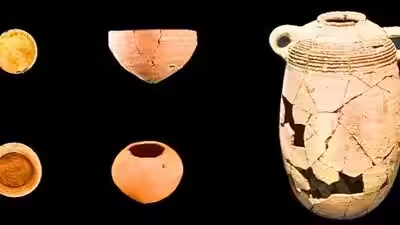
Archaeologists working at the ancient Egyptian city of Memphis have uncovered a residential complex and a collection of artefacts near the Temple of Sekhmet in Mit Rahina, Giza. An Egyptian-Chinese archaeological mission discovered the site during excavations on August 30, according to Egypt’s State Information Service. Among the findings is a limestone structure that researchers believe may have been used as a wine press, while grape seeds recovered from the area further support this identification. The team also found stone blocks with inscriptions, fragments of statues, and other architectural remains. The discoveries offer a glimpse into activity around one of Memphis’s temple areas and add new evidence to the archaeological picture of the ancient city.
What did the Egyptian-Chinese team discover at ancient Memphis
An Egyptian-Chinese archaeological mission has uncovered the remains of a residential complex near the Temple of Sekhmet at Mit Rahina in Giza. Archaeologists identified mud-brick remains that formed part of the complex, along with artefacts and architectural remains. The mission recovered stone blocks carrying inscriptions and statue fragments. These findings provide evidence of activity around the temple. Mit Rahina was the site of Memphis, a major centre of Egyptian civilisation, and the remains add another layer to Memphis’s archaeological record.

PC: AI Generated
Grape seeds offer clues to a possible ancient wine press
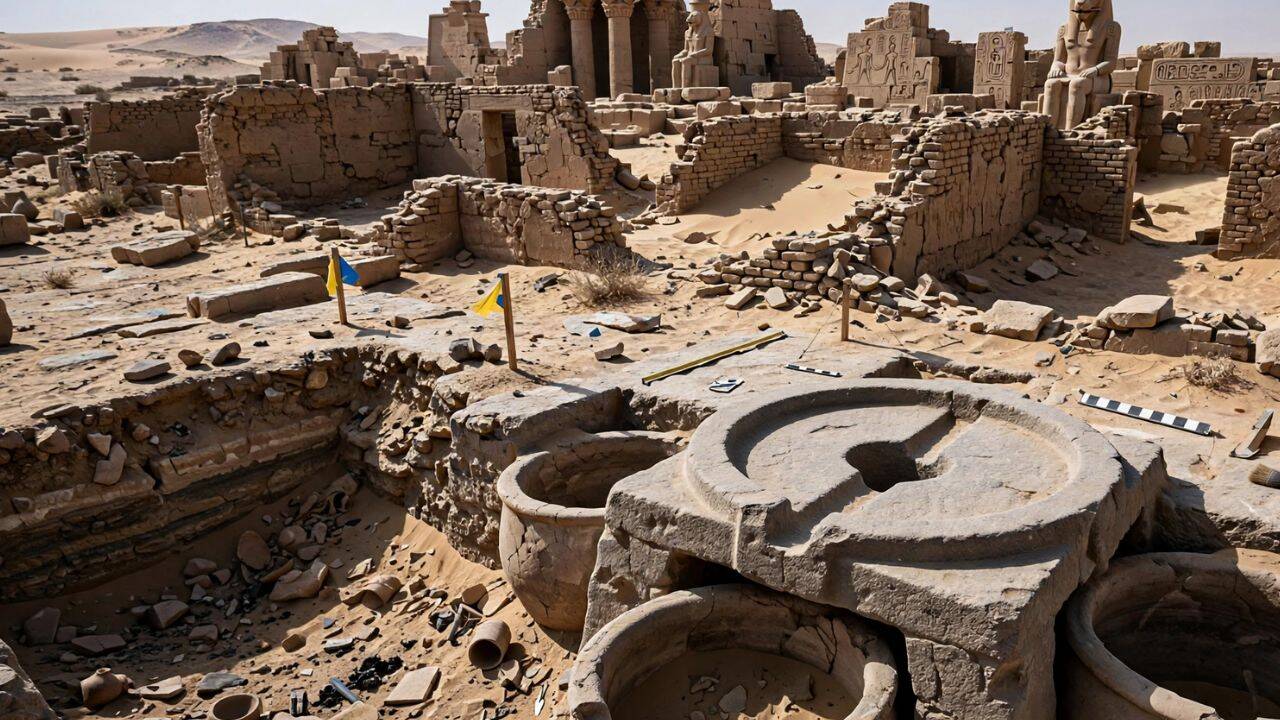
One notable discovery is a limestone structure that archaeologists believe may have been used as a wine press. Grape seeds found in the area provide further evidence for this possibility. The structure adds to the growing picture of activity around the temple and suggests that the site was used for more than religious purposes. It was found alongside the remains of the residential complex and other artefacts uncovered during the excavation. For archaeologists, the structure offers another clue to how this part of ancient Memphis was used. Further examination of the limestone installation and the material found around it could help establish its exact purpose and reveal more about the activities that once took place at Mit Rahina.
What do the inscriptions and statue fragments reveal about Mit Rahina
The excavation has uncovered several findings that shed light on the architectural and artistic character of the site. Among them, there are stone blocks bearing inscriptions and fragments of statues, found alongside the remains of the residential complex and the limestone structure. Together, these discoveries offer clues about the people, buildings, and activities that once shaped this part of Mit Rahina. The inscribed blocks may provide valuable information about structures or individuals linked to the site, while the statue fragments offer a glimpse into its artistic and religious setting. Rather than being isolated objects, the findings form part of a wider archaeological context.
How did life around the Temple of Sekhmet change over time
The discoveries are helping archaeologists examine how different parts of ancient Memphis were used around the Temple of Sekhmet. The remains point to a landscape where residential spaces, structures linked to daily activities, and religious architecture existed within the same wider setting. The mud-brick complex provides evidence of habitation, while the limestone installation and grape seeds offer clues about activities that took place at the site. Inscribed stone blocks and statue fragments add another layer by connecting the physical remains with the artistic and cultural traditions of Memphis.