
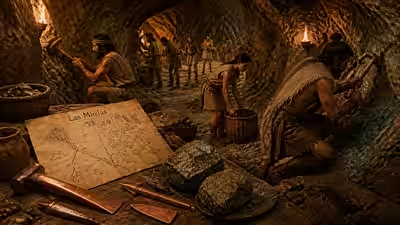
Have you ever wondered where the things our ancestors used came from? Today, we can order almost anything from anywhere in the world, and a product can travel thousands of kilometres before reaching our doorstep. But what about people who lived thousands of years ago? How did they find the materials they needed, and did they really have connections with communities living far away? These questions have fascinated historians and archaeologists for generations, and sometimes, a discovery at a seemingly ordinary location can tell us much more about how people lived and interacted with one another.Copper was one such material that changed the course of human history. During the Bronze Age, people mixed copper with tin to produce bronze, which was then used to make tools, weapons and ornaments. But copper was not available everywhere, and communities often had to depend on other regions to obtain it. Now, a study of an ancient copper mine in southern Spain has offered new clues about how far this metal may have travelled, with evidence suggesting that some of it could have reached Scandinavia, thousands of kilometres away.The research focuses on Las Minillas, an ancient copper mine in the Badajoz region of southern Spain. Archaeologists combined excavations, underground surveys and radiocarbon dating to understand how the mine was used during the Bronze Age. Their findings, published in the journal Antiquity, suggest that Las Minillas was part of a much wider network of prehistoric mining sites across the Iberian Peninsula.
What did archaeologists find at the ancient copper mine?

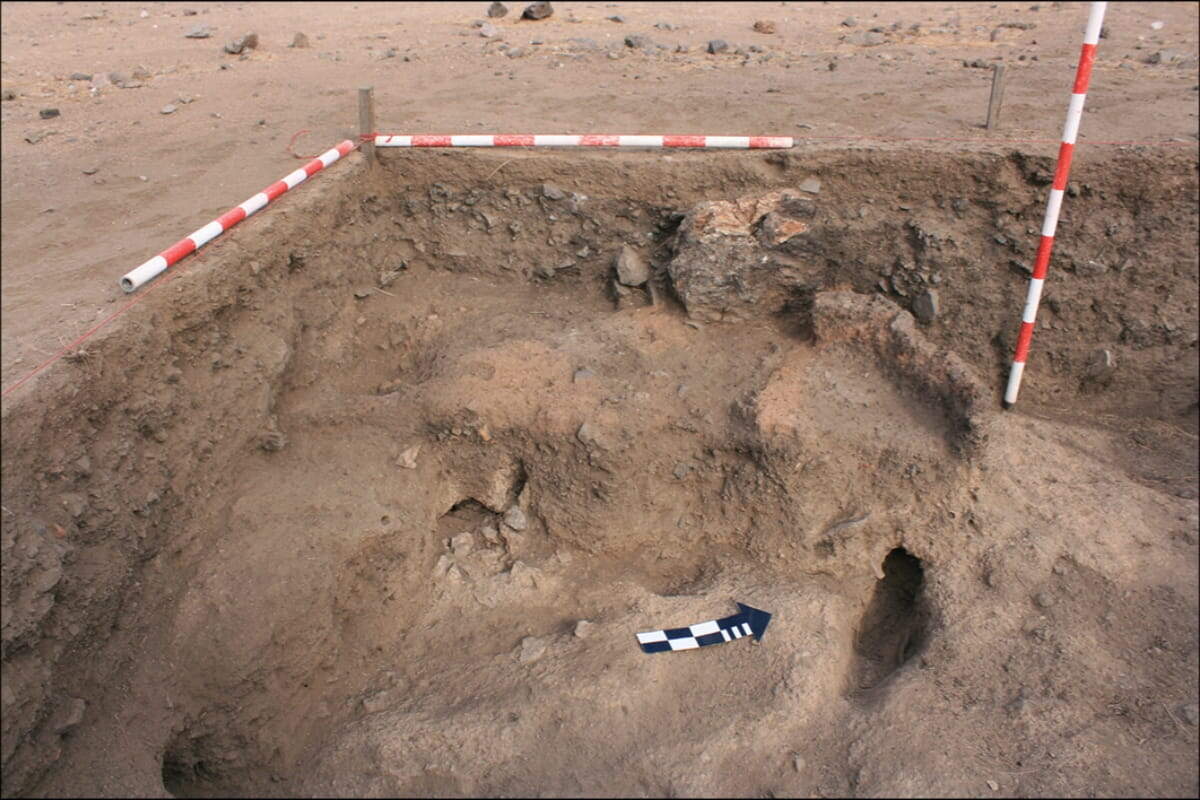
Image of excavations near trench 6, showing a partially preserved, circular pyrotechnological structure. ( Image Credit: Las Minillas Archaeological Team, from J. Latorre-Ruiz et al., Antiquity (2026) )
One of the most interesting discoveries at Las Minillas was the number of stone tools left behind by the people who worked there. Researchers recovered hundreds of tools, including 735 grooved stone hammers that were likely used to break and extract copper-bearing rock. They also found fragments of handmade pottery, offering further clues about the people who worked at the site.The team collected charcoal samples from the mine and obtained 17 additional radiocarbon dates, placing its activity between approximately 1350 and 750 BC. The evidence suggests that copper production at Las Minillas was active between around 1300 and 800/700 BC, making it the largest securely dated Late Bronze Age copper mine excavated in Iberia so far.Interestingly, the mine was not necessarily working in isolation. Researchers identified 84 mining sites as part of a wider network stretching from southern Portugal to southeastern Spain. However, the exact extent of this network and whether all these locations were active at the same time remain unclear.
Did copper from Spain reach Scandinavia?
The discovery becomes even more interesting when we look at the possible journey of the copper extracted from these mines. During the Bronze Age, different communities depended on the exchange of raw materials, and copper was an important part of this trade. Since not every region had its own copper deposits, the metal could travel between communities before being turned into objects used in everyday life.To understand where the copper may have gone, researchers compared the chemical composition and lead-isotope signatures of ores and metalworking remains from Las Minillas with existing records of Bronze Age objects. Lead-isotope analysis helps archaeologists study the geological origins of metals and compare them with known mining regions.The comparison revealed that 11 Scandinavian bronze objects had signatures consistent with copper from Las Minillas. This suggests that metal extracted in southern Spain may have travelled much farther north than the mine itself, potentially through several communities and trading networks.However, this does not mean that copper was transported directly from Spain to Scandinavia. It may have changed hands several times before reaching its final destination. The findings instead offer evidence of the connections that existed between distant parts of Europe during the Bronze Age.
How Iberia may have become an important copper supplier

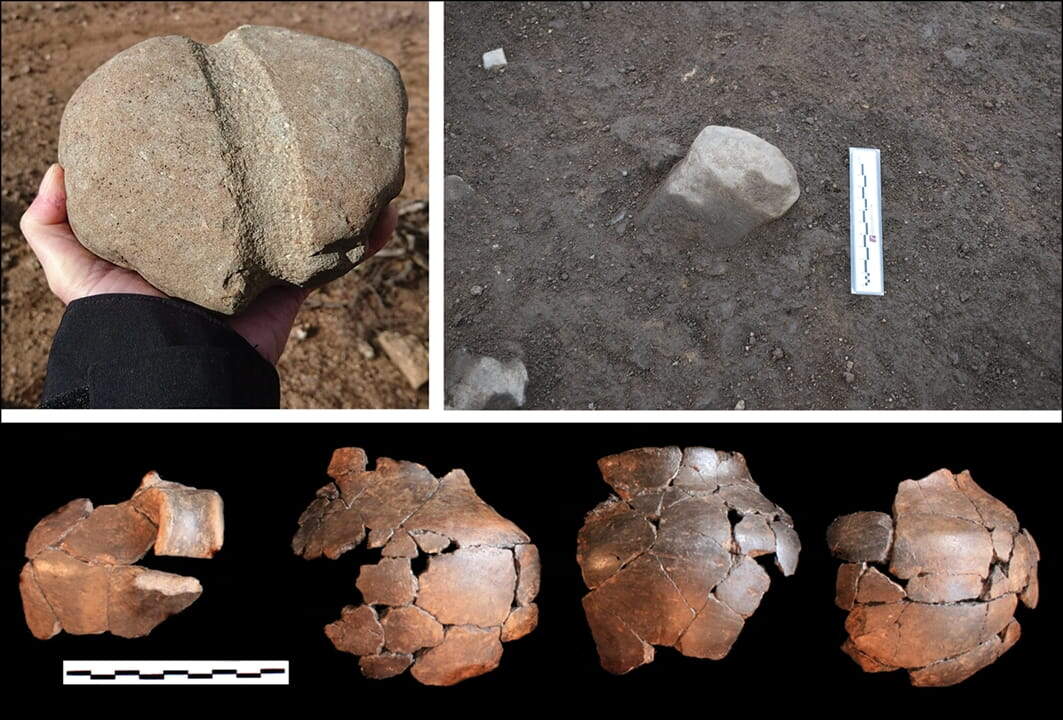
Recovered tools from the copper mine of Las Minillas. (Credit: M. Díaz-Guardamino and Las Minillas Archaeological Team, from J. Latorre-Ruiz et al., Antiquity (2026))
For a long time, archaeological research into Bronze Age copper production in Europe has focused on well-known mining regions such as Wales and the Austrian Alps. The Mitterberg mining district in Austria, for instance, was a major supplier of copper to Central Europe during the Middle Bronze Age. Mines in Wales and the Italian Alps also played an important role in supplying metal to other regions.However, the production at some of these older mining centres began to decline around the middle of the second millennium BC. Researchers suggest that southern Iberia may have become a more important source of copper during the Late Bronze Age, particularly from around 1300/1200 BC.The study estimates that Las Minillas may have produced between 49 and 738 tonnes of copper, although the researchers favour a more cautious estimate of around 197 tonnes. They also suggest that copper from southern Iberia could have reached distant markets through maritime trade routes along the Atlantic coast.There is still much that researchers do not know. Several ancient mines across the Iberian Peninsula remain unexplored or have not been reliably dated, making it difficult to establish how extensive the mining network really was. Further research could help determine whether these sites formed part of a large, active copper-producing region or operated at different periods.What makes Las Minillas particularly interesting is that it offers a glimpse into a world where communities separated by thousands of kilometres may have been connected through something as ordinary as metal. The copper extracted from these Spanish mines was not just a resource for the people who worked there; it may have travelled across Europe, finding its way into objects used by people who would never have known where it came from.