
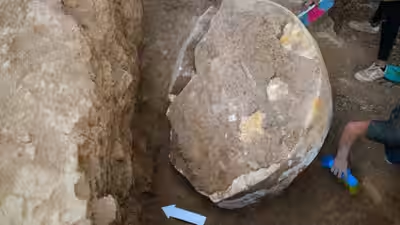
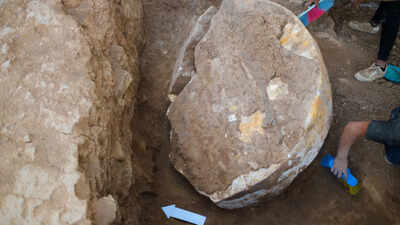
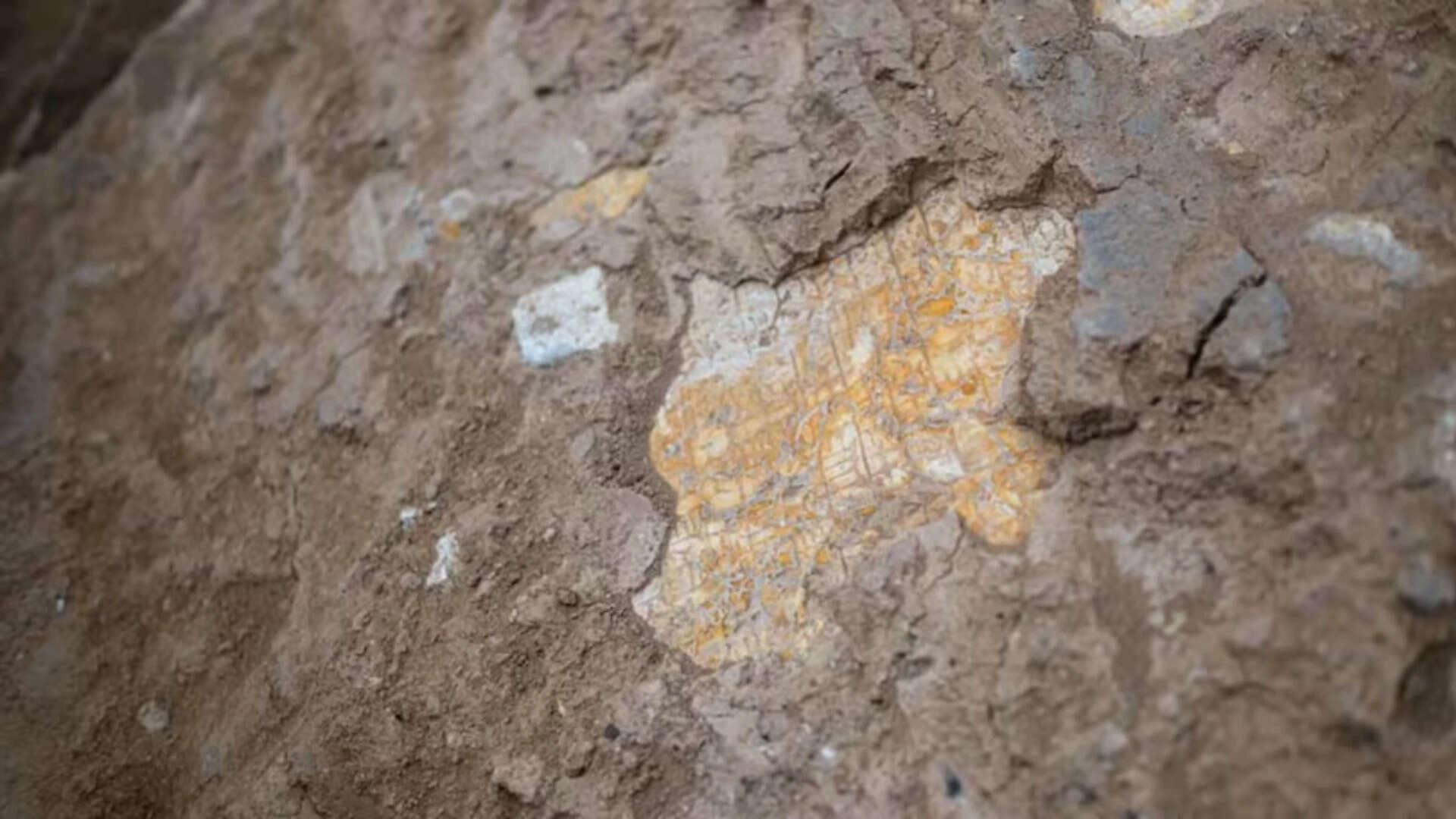
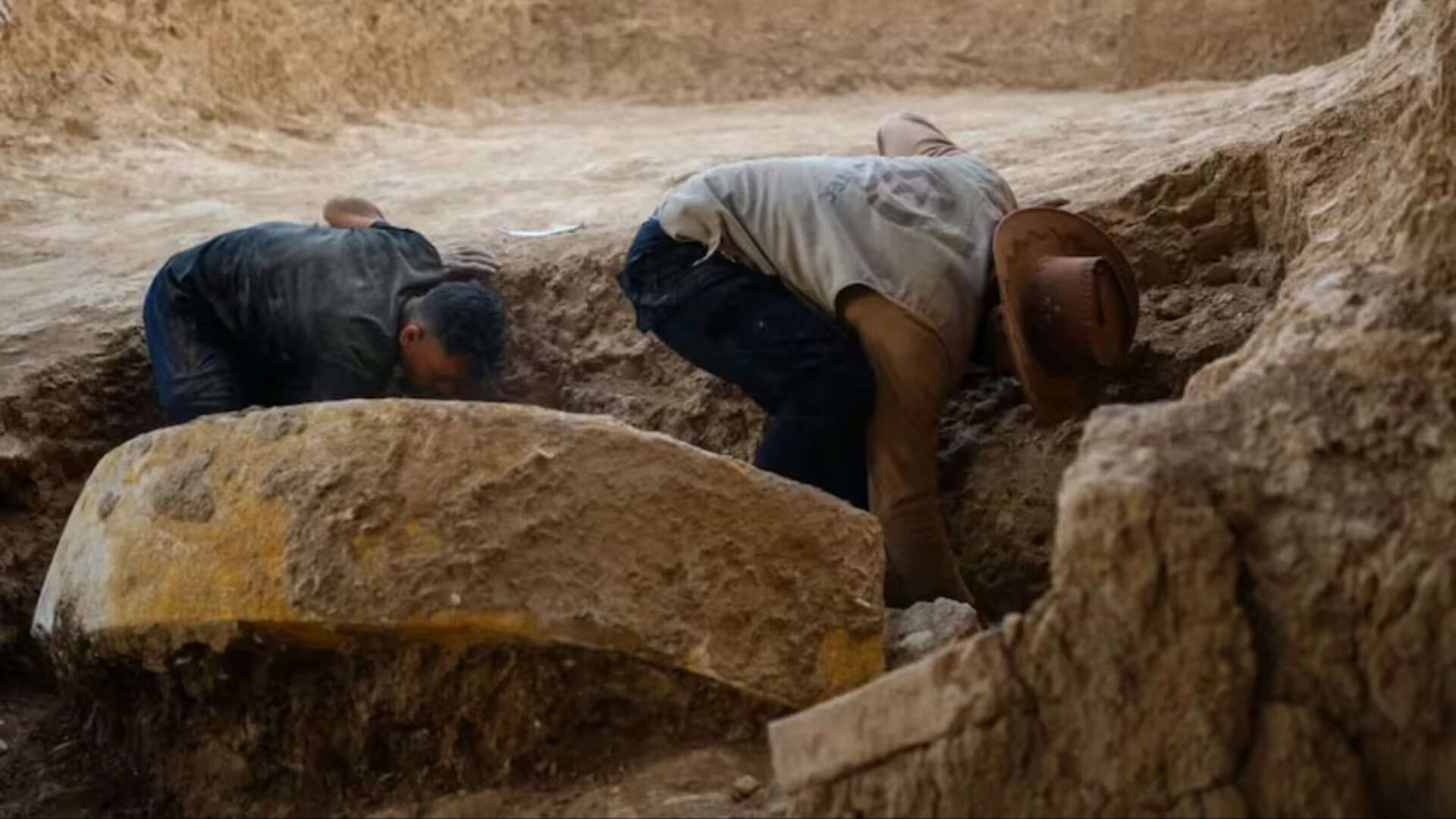
A rare 2,600-year-old Assyrian monument has been found at the ancient city of Nineveh in Iraq. The discovery is a major success for an area where Islamic State militants (ISIS) deliberately destroyed ancient history nearly a decade ago.The stone monument is two metres high. It celebrates the building projects of King Ashurbanipal, who ruled the Neo-Assyrian Empire at its peak between 668 BC and 627 BC. Archaeologists found the artifact at the historic Shamash Gate entrance. The stone features detailed cuneiform writing and carved portraits of kings on both sides.A team of Iraqi and American researchers found the monument during restoration work. They are repairing historical sites that were heavily damaged during the battles to free the city from militant control between 2016 and 2017.The Nineveh Department of Antiquities and Heritage confirmed that the monument has been moved to its headquarters. Experts will now clean the stone, study it, and publish their findings.
A royal record in stone
The front of the newly discovered monument shows a large, detailed carving of King Ashurbanipal himself. The back features two smaller carvings of unnamed Assyrian kings alongside long rows of cuneiform text.Early readings show that the writing describes Ashurbanipal’s large building projects. These included expanding Nineveh’s massive defensive walls, temples, and royal palaces. In ancient times, kings used these stone monuments to record history and spread political propaganda. The stones showed the absolute power of the king to his own people and to foreign visitors.Archaeologist Ruwaid Muwaffaq spoke about the historic importance of the find during a press conference in late June.“This discovery is a significant addition to the record of archaeological finds that highlight the greatness of Assyrian civilisation and its urban development,” Mr Muwaffaq said.He described the monument as “one of the most important artefacts that chronicles the achievements of one of the Assyrian Empire’s greatest kings”.

Rare stele of Assyrian king who reigned 2,600 years ago unearthed in Iraq’s Nineveh
Ashurbanipal is most famous for creating the historic Library of Ashurbanipal in Nineveh. The library originally held about 100,000 texts. It was the largest collection of books in the world until the Library of Alexandria was built in Egypt hundreds of years later. More than 30,000 surviving clay tablets have been recovered from the library over the years. These tablets provide modern historians with their most important information about daily life, science, and religion in ancient Mesopotamia.
Healing the scars of ocupation
Finding the monument at the Shamash Gate holds great symbolic meaning for the local people. Between 2014 and 2017, Islamic State fighters occupied Mosul and the surrounding Nineveh province. The group carried out a deliberate plan to wipe out pre-Islamic cultural history.Militants used bulldozers to destroy the nearby ancient city of Nimrud, including the Palace of Ashurnasirpal II. They also blew up famous entryways along Nineveh’s ancient walls, such as the Mashki and Adad Gates. In February 2015, the group filmed its members smashing original Assyrian artifacts inside the Mosul Museum with sledgehammers and power drills. The group also set up illegal looting rings across the province to sell ancient artifacts on the international black market to fund their war operations.The Shamash Gate is an important eastern entrance where the new stone monument was found. It was badly damaged during the militant occupation and the heavy fighting to free the city.Since the group was driven out in 2017, the State Board of Antiquities and Heritage has worked with international universities to record the damage, track down stolen items, and restart official archaeological digs. The current team at the gate is combining active digging with work to make the damaged structures safe. The project is funded in part by the University of Chicago’s Institute for the Study of Ancient Cultures.
Mosul’s scarred heritage
Documenting Mesopotamia’s deep roots
The state board plans to use this discovery to support the cultural recovery of the Nineveh plains. Ali Obaid Shalgham, the president of Iraq’s Antiquities and Heritage State Board, shared a statement on social media explaining that the find highlights the deep historical roots of the region.The discovery “reflect the antiquity and civilizational depth of the city of Nineveh, as one of the most prominent historical centers in Iraq and the region,” Shalgham said.He added that finding the fragment reflects the “continuation of archaeological work in uncovering more evidence documenting the history of Mesopotamian civilization, highlighting its civilizational depth and human contributions, thereby strengthening its presence on the global cultural and civilizational stage.”Local officials are now deciding whether to display the restored monument at its original spot by the Shamash Gate or place it inside the planned Mosul Civilisation Museum. This new museum is designed to show the continuous history of the city from the Assyrian era all the way through the Islamic golden age.According to Mr Muwaffaq, the discovery offers new clues about how the ancient capital was built. He noted that the monument “reinforces the archaeological evidence indicating that many of the city’s gates and historical sites contain royal tombstones and significant architectural achievements.”
Restoring the Ziggurat of Ur
The breakthrough in Nineveh happens at the same time as another major preservation project further south. In May, authorities started a large repair project on the 4,000-year-old Ziggurat of Ur, a famous terraced temple that is threatened by severe weather and climate erosion.This project is the seventh major repair campaign at the mud-brick temple since it was first built under the Third Dynasty of Ur around 2112 BC. The structure was originally built to honor the Mesopotamian moon god Nanna, the holy protector of the ancient city-state. The temple partially fell apart during the Neo-Babylonian period, but it was later repaired by King Nabonidus before his empire fell.The Ur site also has religious importance. In 1862, a researcher named Henry Rawlinson identified the surrounding area of Tell el-Muqayyar as Ur Kaśdim, the traditional birthplace of Abraham. Current repair crews are using locally made bricks and traditional mortar recipes to rebuild the ziggurat’s first level, fix structural cracks on the second level, and stabilize the remaining staircases using surviving historical designs.