
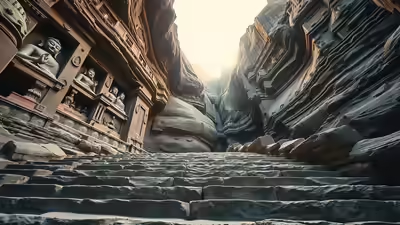
A narrow stone corridor cut directly into a cliff face in south-western China continues to astonish visitors centuries after it was created. Hidden within the vast complex of the Dazu Rock Carvings, the passage is lined with towering figures sculpted into the living rock, creating the impression of walking through an open-air stone sanctuary. From a distance, the corridor appears modest in scale. Yet with each step forward, the sculptures grow larger, the passage deepens and the craftsmanship becomes increasingly striking. Human figures standing beside the carvings offer a powerful sense of perspective, revealing the extraordinary ambition behind the monument. Today, this remarkable site forms part of one of China’s most important collections of religious art, preserving more than a thousand years of history, belief and artistic achievement.
The ancient Chinese rock carving complex that transformed a mountainside into sacred art
The stone passage forms part of the renowned Dazu Rock Carvings in Chongqing Municipality, a collection of religious sculptures created between the ninth and thirteenth centuries during the late Tang and Song dynasties.According to UNESCO, the site contains “an exceptional series of rock carvings dating from the 9th to the 13th century”, representing Buddhist, Taoist and Confucian influences in a uniquely integrated artistic tradition.“The Dazu Rock Carvings are remarkable for their aesthetic quality, their rich diversity of subject matter, both secular and religious, and the light they shed on everyday life in China during this period.”Unlike many monumental religious sites that focus solely on spiritual themes, the Dazu sculptures depict a broad range of subjects, including morality, daily life, philosophy and religious teachings. Scholars regard them as one of the most complete surviving visual records of Chinese religious culture from the medieval period.The carvings were added to the UNESCO World Heritage List in 1999 because of their outstanding historical and artistic significance.
Towering statues and hidden corridors reveal the scale of medieval Chinese craftsmanship
One of the features that stand out in the Dazu Complex is the manner in which it conceals size.There are several instances when one goes through narrow rock cut passageways, only to come out into spaces that are surrounded by huge carvings.This element of contrast between small areas and large carvings provides for an excellent visual experience even after many years since its creation.The International Council on Monuments and Sites (ICOMOS), during the assessment of this site, commented on the exceptional state of conservation of the carvings and their significance as being masterpieces of human creative genius.The sculptures have managed to retain much of their detailed features despite several centuries of being exposed to weather.One sees fine detailing in the flowing robes, expressive faces, and architectural elements. The corridor here also has a specific purpose in mind.As one moves along through the corridor, the viewpoint changes to show the entire sculpture gradually.
How the Dazu rock carvings survived for centuries and continue to fascinate visitors
The survival of the Dazu Rock Carvings is remarkable in itself.Unlike many ancient monuments affected by warfare, natural disasters or extensive reconstruction, large portions of the complex remain exceptionally well preserved. Researchers attribute this to a combination of favourable geography, continuous local reverence and ongoing conservation efforts.According to UNESCO, the carvings represent “the highest expression of Chinese rock art”, distinguished by both their artistic excellence and historical value.“The carvings provide outstanding evidence of the harmonious synthesis of Buddhism, Taoism and Confucianism.”Today, the hidden stone corridors and towering statues of Dazu continue to attract archaeologists, historians and travellers from around the world. What first appears to be a simple passage through rock gradually reveals itself as something far more extraordinary: a masterpiece of medieval engineering, religious devotion and artistic vision carved directly into the mountainside.