
The Texas Court of Appeals has upheld a finding that a refinery company was grossly negligent in the asbestos-related death of a former worker, but reduced his family’s damages award from $325,000 to $200,000. In its November 5 ruling, the court also allowed the family to pursue additional claims against the company, sending them back for further proceedings.According to case details on Justia, The case concerns Louie Scudder, who worked at the La Gloria refinery in Tyler, Texas, for a total of 38 years. He first joined the refinery in 1958, left in 1964 and returned in 1966, continuing until 1998. He was diagnosed with mesothelioma in November 2019 and died on June 25, 2022, aged 83.His family alleged that years of exposure to asbestos at the refinery caused his illness and death. His son, Carl Christian Scudder, filed a lawsuit against Tyler MD Holdings LLC, the successor-in-interest to Tyler Holding Company, formerly known as La Gloria Oil and Gas Company.A jury found that asbestos fibres from the refinery had caused Scudder’s illness and death. It also held the company grossly negligent and awarded his family $325,000 in exemplary damages. The company challenged the verdict, arguing that the evidence did not establish that Scudder’s exposure at the refinery had caused his illness.
What happened during his years at the refinery
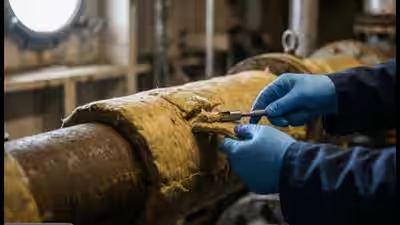
Scudder’s work involved several tasks that brought him into contact with insulation materials containing asbestos.As a maintenance helper, he sometimes drilled into insulated pipes and equipment to remove plugs. He also used a wrench to knock off pipe coverings. The court noted that these activities created dust.He helped insulation workers cut pipes and prepare insulating cement. Scudder estimated that he worked with insulation for about three hours a week. When he poured dry cement powder into a bucket and mixed it with water, it created visible dust.At other times, he helped clean insulation debris. He also spent about 15 minutes twice a week sweeping the insulation shop.Scudder told the court that before 1980, he did not recall receiving warnings about asbestos or training on how to handle it. He also did not remember being given a mask or respirator or seeing warning signs about asbestos at the refinery. He said he did not recall the refinery testing the air for asbestos.In 1989, he received a week’s training on asbestos removal. He was taught about the risks, how to set up enclosed work areas and how to use protective clothing and a respirator. He was also shown how to collect and dispose of asbestos safely.
Link between exposure and illness
Tyler MD argued that Scudder’s exposure at the refinery was too low to have caused his mesothelioma. It pointed out that the exposure levels calculated for him were below the limits permitted under workplace safety standards at the time.The family’s industrial hygiene expert, Kenneth Garza, reviewed Scudder’s work history and testimony. He calculated his asbestos exposure between 1972 and 1980 at 0.175. His calculation considered the work Scudder did, how often he did it, how long the tasks lasted and the level of exposure.Garza compared this estimate with studies involving people who performed similar work. He said Scudder’s exposure represented more than a doubling of the risk of developing mesothelioma. One study indicated a 21-fold increase in risk, while two others showed increases of 2.8-fold and four-fold.The family’s medical expert, Dr Edwin Holstein, told the court that Scudder’s exposure at the refinery between 1972 and 1980 was a substantial factor in causing his mesothelioma and death. He also said he found no other cause for the illness apart from the asbestos Scudder inhaled at the refinery.The appeals court found that the family had presented enough evidence to support the jury’s decision. It rejected the company’s argument that exposure below workplace safety limits automatically meant it could not be held responsible for gross negligence.
Court finds company failed to protect workers
The court also examined what the company knew about asbestos and the steps it took to protect employees.The judgment referred to evidence that the National Safety Council had discussed asbestos hazards in 1951. By 1966, it was specifically concerned about mesothelioma. Workplace safety rules covering asbestos were introduced in 1972.Scudder said he did not recall receiving asbestos warnings, safety training or protective equipment before 1980. The company’s representative also acknowledged that workplace safety rules were known in the oil and gas industry during the 1970s.The court examined a company document dated June 22, 1979, which discussed monitoring asbestos in the air. However, the document did not include measurements or other data showing that such monitoring had been carried out.An inspection by the Texas Air Control Board on June 22, 1989, found that a sample of insulating material from a heat exchanger pad contained 45% to 50% asbestos. The court noted that Scudder had worked in that area.Another company document discussed the cost of removing asbestos. It said that $500,000 would not be enough for the work and that there was no comprehensive estimate for the project.The appeals court said the jury could have concluded that the company knew about the dangers of asbestos but did not take adequate steps to protect workers. It therefore upheld the finding of gross negligence.
The court allowed more claims
The family had also accused the company of negligence and other wrongful acts. However, a lower court had earlier dismissed these claims after accepting the company’s argument that workers’ compensation rules prevented the family from pursuing them.The appeals court found that the company had not provided enough evidence to show that it had the required workers’ compensation insurance for the relevant years of Scudder’s employment.It also noted that mesothelioma was not covered as an occupational disease under Texas law before an amendment took effect in August 1971. The court therefore reversed the earlier decision dismissing the family’s additional claims and sent them back for further proceedings. This does not mean the company has been found liable on those claims.
Why the damages were reduced
The jury had awarded the family $325,000 in exemplary damages. It had also found that Scudder’s wife, Mary Ann, suffered $175,000 in past and future financial losses because of his death.However, the appeals court said the evidence did not support that amount. Mary Ann had told the court that Scudder handled household maintenance and gardening. After his death, she paid a man $40 to mow the lawn and carry out basic yard work.The court said her testimony supported a single payment of $40 but did not establish how often such services were needed or how much the other household work was worth. It found that the evidence was not enough to justify the $175,000 amount.Under Texas law, the court said the maximum exemplary damages in this case could not exceed $200,000. It therefore reduced the award from $325,000 to $200,000.The court sent the family’s additional claims back for further proceedings while upholding the jury’s finding that the company was grossly negligent.