
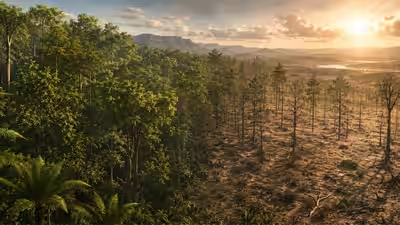
Fossils from Wyoming are revealing how forests responded when Earth experienced one of its most intense episodes of global warming around 56 million years ago. A new study, published in the journal Science on August 13, 2026, reconstructs the structure of forests during the Paleocene-Eocene Thermal Maximum, or PETM, and finds that their canopies became dramatically more open as temperatures rose and moisture became less available. The researchers estimate that forest canopy cover declined by about 60% and remained substantially reduced for more than 100,000 years before recovering. The finding offers a striking example of how climate-driven stress can alter entire ecosystems for extraordinarily long periods. Scientists caution that the PETM is not an exact preview of modern climate change, but its fossil record provides an important warning about what can happen when warming pushes vegetation beyond its environmental limits.
Wyoming fossils reveal what happened to ancient forests during global warming
The new research is titled “Forest canopy decline under elevated CO2 during the Paleocene-Eocene Thermal Maximum” and was published in Science by Regan E. Dunn and colleagues. The team examined fossil material from Wyoming to reconstruct not only which plants lived there but also the physical structure of the forest above them. The PETM began around 56 million years ago after a major injection of carbon into the atmosphere and ocean, producing global warming generally estimated at around 5 to 6°C, with some reconstructions placing the increase as high as 8°C. The warming transformed vegetation across many regions, and Wyoming provides an unusually detailed terrestrial record because sediments from the period preserve leaves, pollen and other plant remains. Earlier work in the Bighorn Basin showed that the region’s forests underwent a major turnover during the event. Ellen Currano, a University of Wyoming palaeobotanist who has studied these forests for years, previously described the change as a “nearly complete turnover of plants”.
Fossil leaves revealed the density of the ancient canopy
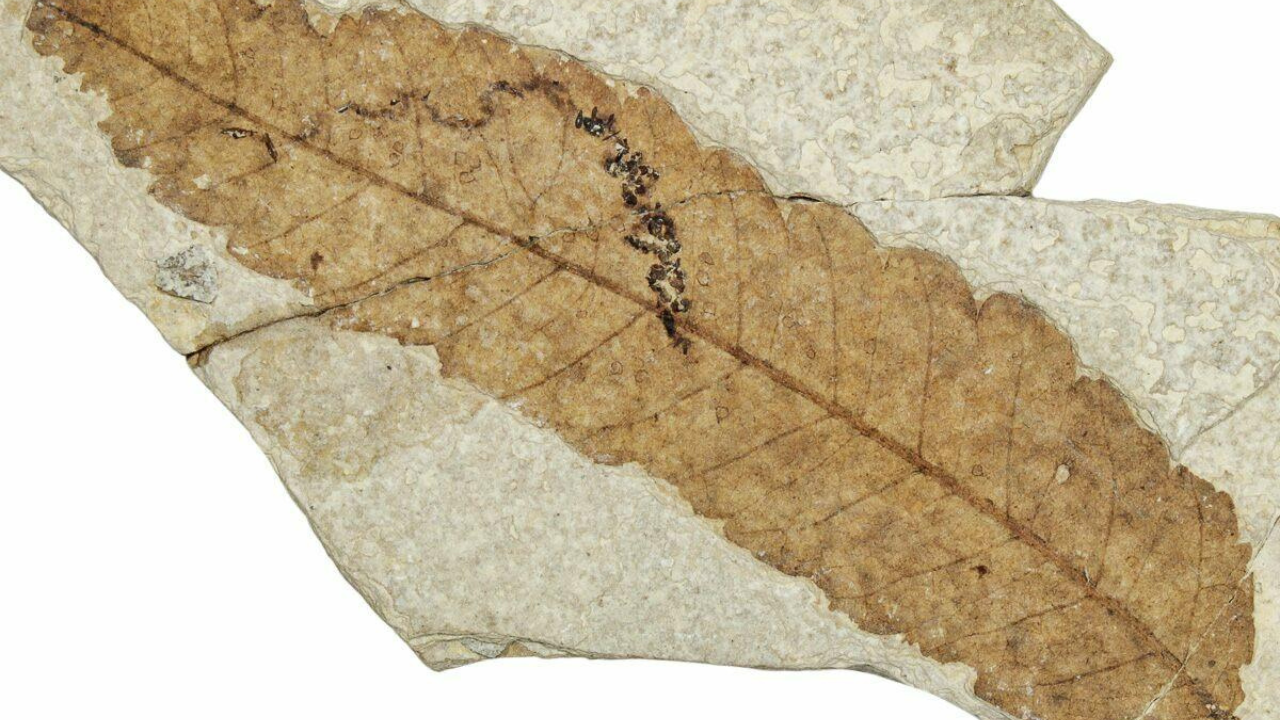
The researchers developed their reconstruction using microscopic details preserved in fossilised leaf cuticles, the thin waxy layer covering leaves. The shape of epidermal cells changes depending on how much sunlight reaches a developing leaf. Leaves growing under dense shade tend to develop more elongated cells, while those exposed to stronger sunlight develop shorter and more rounded cells. By calibrating this relationship against modern forests, scientists can use fossil cuticles to estimate the leaf area index, or LAI, which measures the amount of foliage relative to the ground area beneath it. A higher LAI indicates a denser, multilayered canopy, while a lower value indicates a more open forest. The research therefore provides a way to reconstruct an aspect of a 56-million-year-old forest that cannot be observed directly. Previous work by the team had already established this method in Wyoming, while the new Science study applies it to show how canopy structure shifted through the PETM.

Heat and drying pushed the forest beyond its limits
The forest did not enter the PETM in a weakened state. According to the study, canopy density was exceptionally high just before the rapid warming began. As temperatures climbed, however, the conditions that had supported the dense vegetation deteriorated. Heat and reduced water availability placed increasing stress on trees, and the canopy opened as trees died. The decline mattered beyond the plants themselves because a dense canopy influences sunlight, ground temperature, moisture, photosynthesis and the movement of water through an ecosystem. As the forest became more open, the surrounding landscape also changed, with geological evidence indicating a shift towards coarser river deposits and altered sediment movement. The findings demonstrate how climate stress can spread through an ecosystem rather than affecting individual species in isolation. A separate modelling study published in Nature Communications concluded that PETM-scale warming could have exceeded the adaptive capacity of vegetation systems, leading to a prolonged reduction in ecosystem productivity and carbon-regulating functions.
Forests eventually returned, but recovery took more than 100,000 years
The ancient forest story was not one of permanent destruction. Once the extreme PETM climate began to ease, temperatures gradually declined and water availability improved. The forests eventually recovered, and later vegetation could become even denser than before the warming event. But the timescale is what makes the discovery striking. The new research indicates that the canopy remained substantially altered for more than 100,000 years, meaning that an ecosystem that had existed in a relatively stable form could take thousands of generations to regain its earlier structure. This long recovery is consistent with other research showing a 70,000 to 100,000-year lag in the recovery of biospheric carbon stocks following PETM warming. The record therefore illustrates both the resilience and the vulnerability of forests. They can return after major environmental disruption, but recovery on geological timescales offers little comfort for human societies that depend on forests today.
The Wyoming record offers a warning for today’s climate
The PETM is considered one of the most useful deep-time comparisons for understanding greenhouse warming, but scientists stress that it is not a direct forecast of the future. One major difference is the speed of carbon release. Research highlighted by the Smithsonian notes that the initial carbon release associated with the PETM occurred far more slowly than today’s human-driven emissions, with estimates suggesting the ancient rate was roughly one-tenth of the modern rate. That difference matters because ecosystems have more opportunity to migrate, adapt or adjust when environmental change occurs slowly. Today, forests are simultaneously facing rising temperatures, drought, wildfire, pests, habitat fragmentation and land-use pressures. The new study therefore does not show that modern forests will necessarily take 100,000 years to recover. Instead, it demonstrates that rapid or sustained warming can alter forest structure profoundly and that ecosystem recovery can extend far beyond a human lifetime. Regan Dunn and her colleagues’ reconstruction provides a geological record of that vulnerability, while the forest’s eventual return also shows that resilience is possible when climate pressures eventually ease.