
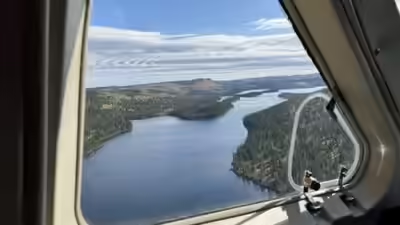
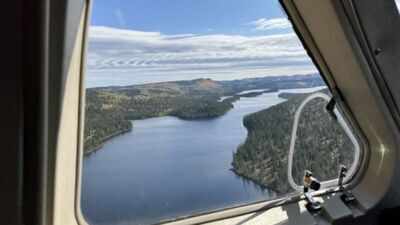
In late 2023, amateur astronomer Joël Lapointe was doing something very ordinary: Mapping out forest roads for a summer road trip in Quebec. While zooming around northern regions on Google Maps, he spotted something that looked anything but ordinary. It was a neat, circular depression in the landscape, about 100 kilometers north of the town of Magpie.On screen it appeared as a ring-like pit in the middle of the forest. For someone who loves space and meteorites, it was enough to make him pause. “For an amateur astronomer who loves to connect with space and loves meteorites, it was just amazing,” Lapointe later recalled, reported CTV News.
From “this can’t be real” to “maybe it is”
Lapointe’s first reaction wasn’t to celebrate; instead it was to doubt himself. Surely, he thought, if this really were anything important, scientists would already know about it.“I told myself, ‘You haven’t discovered anything, Joël, it’s not possible, they must already know about this,’” he said, as per the report.But the more he looked, the more the circular shape nagged at him. He checked known crater databases and couldn’t find any listing that matched the location. That absence planted a seed: Maybe this wasn’t just a random geological feature. Maybe it really was something undiscovered.Instead of brushing the idea aside, Lapointe decided to reach out to experts.It wasn’t instant. It took a few attempts before he found researchers who were willing to investigate. Eventually, a French research centre took interest in the strange pit he had flagged. For Lapointe, that was both exciting and nerve‑racking.“It was exciting, I wanted to have the latest news as soon as possible , but I didn’t bother them, because they’re professionals,” he further shared. He knew that good science takes time.
A cautious scientist, a rugged expedition

News of the potential crater reached Gordon Osinski, a professor of earth sciences at Western University in London, Ontario, who studies impact craters and runs the public reporting site Impact Earth. He’s no stranger to enthusiastic emails about “craters” that turn out to be quarries, lakes, or natural depressions, as per The Canadian Press.So when he first heard about Lapointe’s find via his French colleagues, he was skeptical. Many supposed discoveries don’t survive a closer look.But this case stood out. The pit’s circular topography looked intriguing, and preliminary analysis of rock samples suggested something unusual. Curiosity overcame skepticism, and Osinski eventually co‑led an expedition to the site in 2025.The team travelled by float plane to reach the remote location. What they found on the ground was rugged, challenging terrain, which is far from a tidy, easy‑access field site.“We didn’t really know what to expect, where we could land to get to shore and where we could set up camp. So it was going into the unknown, which I enjoy, a bit of an adventure,” Osinski said.
How do you prove it’s a crater?
PC: AI Generated
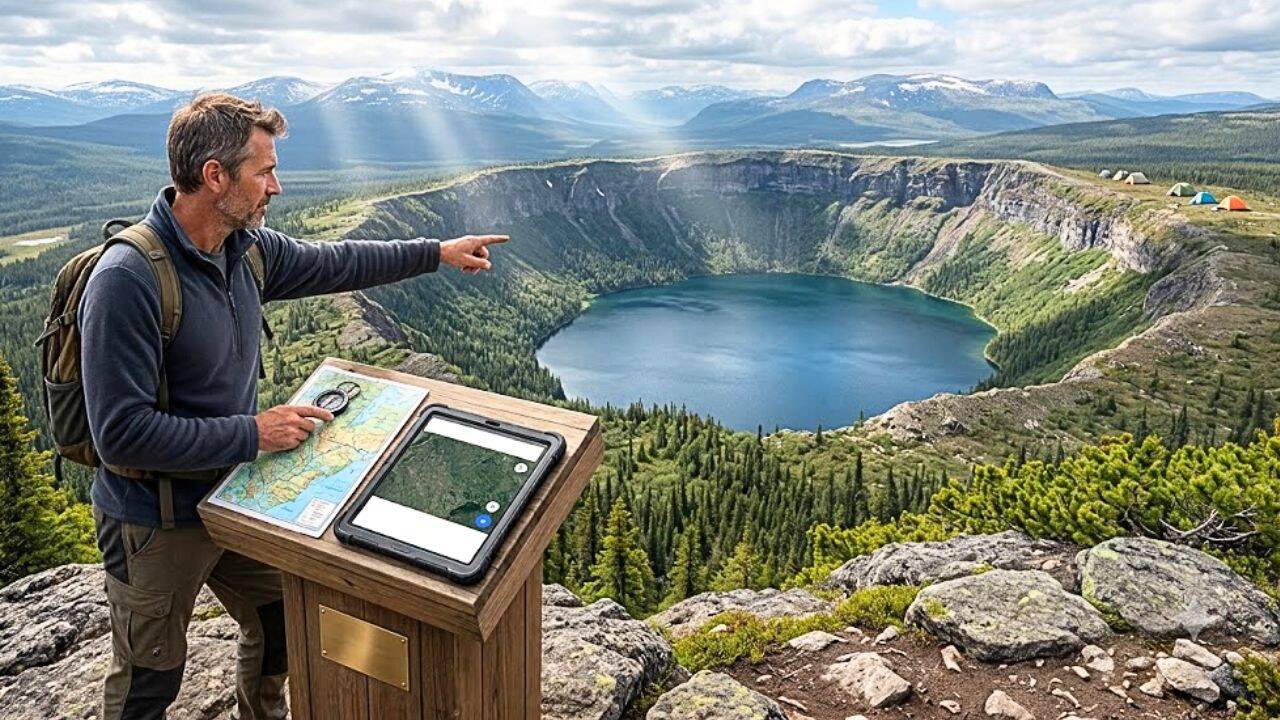
To confirm that the pit was actually a meteorite impact crater, the researchers needed specific kinds of evidence. There are two main routes:Finding the meteorite itself, or fragments of it, in or around the structure.Finding signs in the surrounding rock that it has been subjected to the extreme pressures and energies of an impact.For a crater roughly 25 kilometers in diameter, much larger than many of the more recent, small impacts, finding meteorite fragments is unlikely. Over hundreds of millions of years, any remaining pieces are often eroded, buried, or otherwise lost.So the team focused on the rock.On site, they quickly found key indicators:Shatter cones are distinctive, cone‑shaped fracture patterns in rock that form under the immense pressure of a meteorite strike.Impact melt rock are rock that has literally melted and re-solidified due to the intense heat generated by the impact.These features don’t arise from ordinary geological processes. Together, they strongly point to a violent collision from space.“We almost had a bet: ‘How old do you think the crater is?’,” Osinski said. At first, he guessed somewhere between 38 and 200 million years. The actual age turned out to be far older: about 390 million years.That places the event long before dinosaurs, mammals, or humans; back in a time when life on land was only just beginning to take hold, and early amphibians were among the pioneers.
Naming Uhackatik and joining a short list
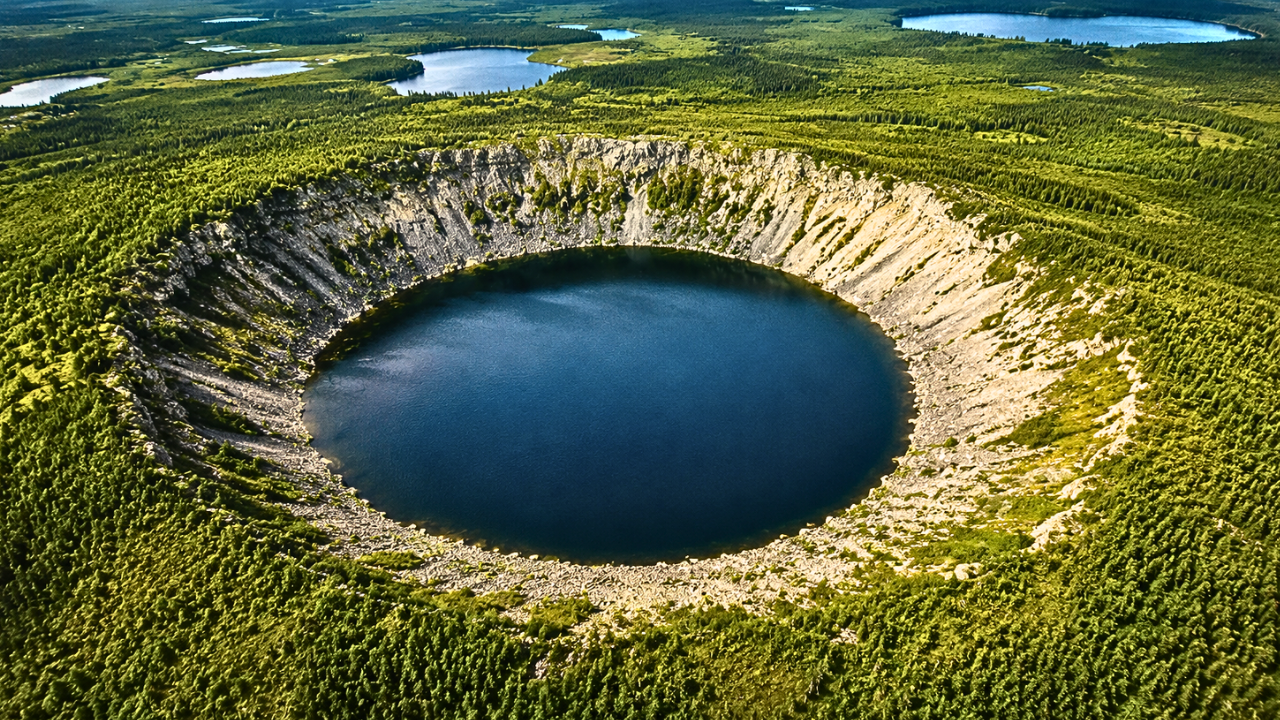
PC: AI Generated
Impact craters are rare enough that confirmed new ones are big news in earth science. Globally, maybe one or two are identified each year, and many of those are small structures.In Canada, it had been a long quiet spell.“The last crater, period, to be discovered in Canada was (in) 2010. So it’s been 16 years since we’ve had any new craters reported in Canada, so it’s kind of fun to add to the list,” Osinski noted.After discussions with the Ekuanitshit Innu council, the crater received a name: Uhackatik. Naming it in collaboration with the local Indigenous community acknowledges both its scientific importance and its place on traditional lands.For Lapointe, the confirmation came in stages. The research team sent him some details and photos from their expedition and explained that they had found impact evidence. He remembers the moment vividly.“At that point, I was over the moon, because it was real,” he said.He also had to keep quiet at first—sworn to secrecy until the scientists were ready to share their findings publicly and present them at the Meteoritical Society’s Annual Meeting in Germany.
From a road trip plan to deep time
When Lapointe finally got the green light to talk, he was at work. He immediately told a coworker and fellow amateur astronomer. Together, they tried to wrap their minds around the scale of what he had helped uncover.They weren’t just thinking about a pit in the forest; they were thinking about a moment 390 million years ago when a meteorite slammed into what is now Quebec, leaving a scar big enough to still be visible from space.“At that time, life on Earth was still in its infancy. There were primitive amphibians; it takes us back to a completely different era. It’s pretty impressive that we still have traces (of that period) after all this time,” Lapointe said.The story, first reported by The Canadian Press, shows how modern tools like satellite maps can put deep time within reach of everyday people. It also highlights something quietly inspiring: you don’t have to be a professional scientist to make a real contribution. Curiosity, persistence, and the decision to ask “could this be something more?” can bridge the gap between a summer road‑trip plan and a discovery that belongs to Earth’s ancient history.Thinking about Lapointe’s experience, does it make you more likely to look a little closer at the landscapes you see on maps or in person, and wonder what hidden stories might be sitting there in plain sight?