
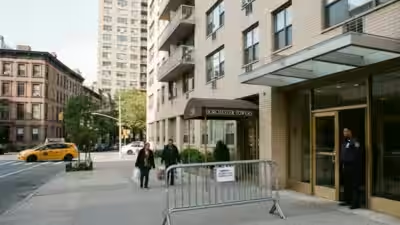
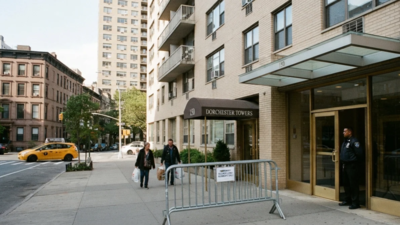
A New York condominium hired round-the-clock security guards after tenants in one unit allegedly caused repeated problems, including confrontations with residents and staff that required police involvement, and although the building’s management board later won a $243,966.96 judgment against the unit’s owner, Alison Hwang, an appeals court has now overturned that payment order and ruled the dispute must be reconsidered. The Appellate Division, First Department, made its ruling on November 24, deciding the condominium board had not proven, as a matter of law, that Hwang broke the building’s rules or showed she “allowed or permitted” a nuisance, while also finding major questions remained over whether the extra security was truly necessary and whether Hwang should pay the entire bill for it. The court vacated the money judgment and sent the case back to the lower court for more work without dismissing the board’s claim entirely, meaning Hwang could still face financial responsibility if the court later finds she did not take enough steps to stop the alleged nuisance.
Complaints followed tenants’ arrival
The dispute centered on a condominium unit at Dorchester Towers in New York City that Hwang had leased to tenants starting in 2016, where serious problems began in August 2018 shortly after the building approved an extension of their lease. According to the appeals court’s records, Hwang met with representatives from the condominium board to discuss numerous complaints about the tenants’ behavior, including loud disturbances, confrontations with other residents and building staff, and several incidents that led to police involvement.Following this meeting, Hwang’s lawyer sent a letter to the tenants demanding they stop the behavior deemed a nuisance, and Hwang also served them with a legal notice on September 12, 2018, terminating their tenancy effective October 31. This action did not end the conflict, as the court stated the tenants continued their alleged disruptive behavior after receiving the eviction notice, prompting the condominium board in October 2018 to hire MG Security Services for continuous, 24-hour security in the building at significant extra cost and later try to recover those expenses from both Hwang and the tenants.
Landlord began eviction proceedings
When the tenants did not move out of the unit by the October 31 deadline, Hwang started a legal case in Civil Court, known as a holdover proceeding, to have them legally evicted. While that eviction case was still going on, the condominium board filed a separate lawsuit on December 18, 2018, against both Hwang and the tenants seeking compensation for legal fees and other expenses it claimed to have incurred because of the tenants’ actions.Those expenses included repair costs and the large amount of money spent on the additional security, which the board argued Hwang should be responsible for as the unit owner under condominium rules obligating unit owners to prevent nuisance behavior. The board also asked the court for a temporary restraining order requiring the tenants to remove signs hanging in their windows, stop feeding birds on the property, stay away from the management office and lobby, stop harassing building staff, follow all condominium by-laws and rules, and stop the behavior described in complaints made between May and December 5, 2018.
Board secured a $243,966.96 judgment
The lawsuit continued in the New York Supreme Court in New York County, where both sides filed motions asking the court to resolve key parts of the dispute without a full trial. The condominium board requested summary judgment on its claim for monetary damages, listed as its seventh cause of action, while Hwang opposed the request, asked the court to dismiss that specific damages claim entirely, and sought a ruling in her favor regarding a counterclaim she had filed seeking declaratory relief.In an order entered on or about October 9, 2025, the trial court sided with the board, granting its motion for summary judgment on the damages claim and dismissing Hwang’s counterclaims, followed by a final judgment entered on October 24, 2025, awarding the board $243,966.96 in damages. Hwang appealed this decision, challenging the lower court’s ruling that held her financially responsible for the board’s security and legal expenses, which required the appellate judges to decide whether the condominium proved Hwang breached its by-laws and whether the costs the board sought to recover were legally proper to impose upon her.
Judges found questions over landlord’s responsibility
The appeals court determined that the board had not established, as a matter of law, that Hwang violated the by-laws prohibiting an owner from “allowing or permitting” a nuisance in their unit. The judges stated that the evidence available did not justify granting the board summary judgment on that claim, meaning the issue was not conclusive and required further examination rather than being decided in the board’s favor without a trial.The court also looked closely at whether hiring round-the-clock security was necessary, finding unresolved questions about whether the board could have avoided these high costs by seeking preliminary injunctive relief or taking other legal steps similar to the measures it later got from the court. In simple terms, the judges were not convinced that the full cost of the 24-hour security could be automatically transferred to the landlord, so the specific circumstances surrounding the decision to hire the security firm and any possible cheaper alternatives needed to be reviewed.The court’s decision leaves open the possibility that Hwang could still be found to have breached the condominium rules, and if the lower court reaches that conclusion after reviewing all the evidence, it must then decide if making Hwang pay all the security expenses is fair and reasonable. The board’s legal fees will also need to be assessed, as the appeals court stated any legal fees the board eventually seeks must be reasonable and recoverable under the condominium’s own by-laws.
Counterclaims dismissed despite appeal success
While Hwang succeeded in having the large monetary judgment vacated, the appeals court did not grant every request she made, agreeing with the lower court’s decision to dismiss her counterclaims after finding they did not establish a proper legal basis for declaratory relief and were otherwise vague, conclusory, or not supported by the court record. Therefore, the final ruling left the condominium board’s damages claim unresolved and sent it back for new proceedings while keeping the dismissal of Hwang’s counterclaims in effect.The Appellate Division, First Department, unanimously modified the lower court’s judgment, vacating the $243,966.96 award, denying the board’s motion for summary judgment on its seventh cause of action, sending the matter back to the lower court for further proceedings, and affirming the rest of the lower court’s decision. Issued on November 24, 2026, by a five-judge panel of Justices Scarpulla, Shulman, Rosado, Michael, and Hagler, the ruling means the trial court must now determine whether Hwang failed to take sufficient action to address the tenants’ alleged nuisance and, if so, whether the condominium can recover its security expenses and legal fees from her.