
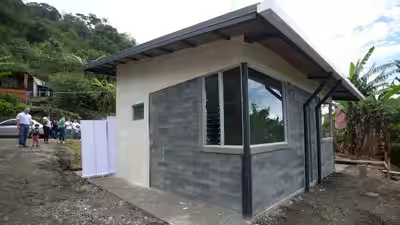
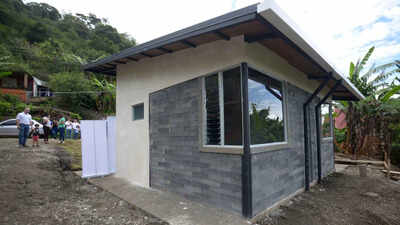
Cindy Mora Abarca spent 9 years saving money for a small plot of land in the Lámparas neighbourhood of Alajuelita, near San José, Costa Rica, hoping to eventually build a permanent home for herself and her 6-year-old son, Fabrizio. She eventually secured the land through a loan, but that left her without enough money to construct a house on it. Her situation changed when she connected with Habitat for Humanity Costa Rica, which paired her case with Procter & Gamble, the local organisation Urbarium and recycled materials group Ekojunto. Together, the partners built a home using interlocking blocks made primarily from recycled plastic waste, giving Mora and her son a permanent place to live. Construction began in April 2018, and the completed house was handed over to the family on May 26 that year. The project turned thousands of kilograms of discarded plastic into the walls of a real family home, while also demonstrating how recycled materials could be incorporated into conventional residential construction.
How recycled plastic was turned into the home’s walls
According to reporting by La Nación, the house used approximately 7 tons of recycled plastic, with the material supplied through Procter & Gamble’s corporate social responsibility programme. The plastic was processed into interlocking construction units known as Bloqueplas, a system developed to allow the pieces to fit together much like Lego blocks. Andrea Ramírez of Urbarium described the construction method as a practical way to transform plastic waste into building material rather than simply sending it for disposal. Recent retellings of the project commonly cite around 850 blocks, although the original Costa Rican reporting primarily emphasised the roughly 7 tons of recycled plastic used in the construction. The plastic blocks formed the home’s walls, while conventional materials and methods were still used for the foundation, roof, plumbing, electrical wiring, doors and windows. Once the structure was completed and finished with plaster and paint, the house looked much like any other modest home in the surrounding neighbourhood rather than resembling an experimental recycling project.
Why the claim that 800 volunteers built the house is misleading
One detail that has repeatedly become distorted as the story has resurfaced online is the claim that 800 volunteers built the home. The original reporting describes more than 800 combined hours of volunteer labour, primarily contributed by Procter & Gamble employees, rather than 800 individual people working on the house. That distinction is important because the two figures describe completely different scales of participation. Habitat for Humanity Costa Rica was involved in selecting Mora’s family based on socioeconomic need and ensuring that the property met the necessary requirements for construction, while Urbarium coordinated the local implementation of the recycled plastic block system. Volunteers then contributed their labour during the construction process, working alongside the organisations involved in the project. The home was therefore the result of a partnership between a housing organisation, a private company, local specialists and volunteers, rather than hundreds of people independently coming together to construct a house from plastic.
What the plastic-block home was designed to demonstrate
The project was presented as an example of how plastic waste could be diverted into a useful, durable construction material while helping provide affordable housing. Urbarium publicly attributed several additional properties to its block system, including resistance to seismic forces, thermal and acoustic insulation and protection against weather. Those claims, however, should be treated as claims made by the organisation involved in the project, rather than independently verified characteristics of Mora’s specific house; no independent testing specific to the home has been identified. The blocks were also designed to comply with Costa Rica’s 2010 seismic construction code, according to project materials. For Mora, however, the environmental experiment was secondary to the practical outcome. After spending years saving for land and then struggling to afford construction, she finally had a permanent home where she could raise her son. The project became an early documented example in Costa Rica of recycled plastic being incorporated into a functioning residential building, showing that discarded material could become part of a home’s physical structure rather than simply being treated as waste.