
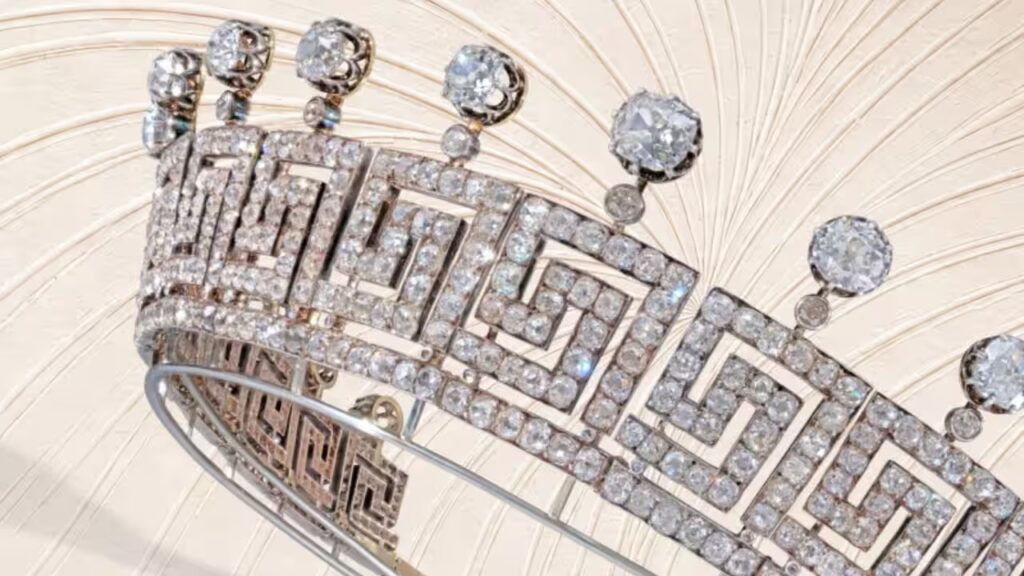
Made in 1862

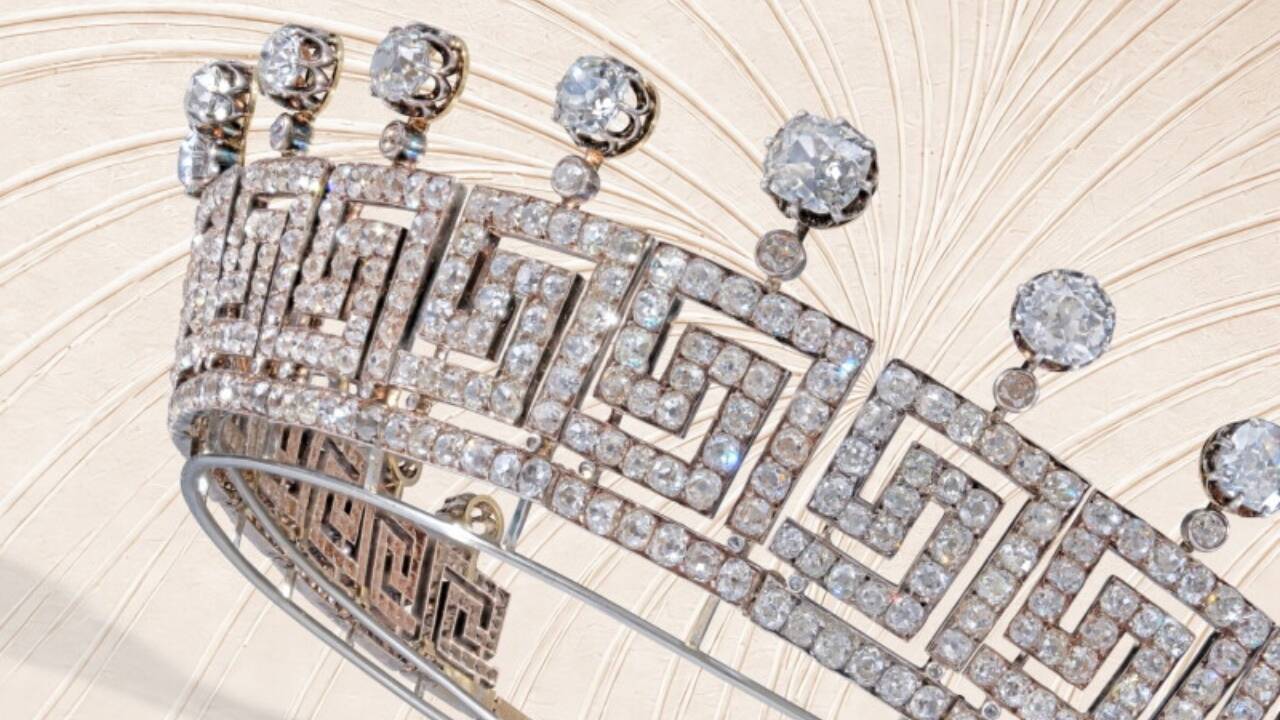
Pic credit: Sotheby’s
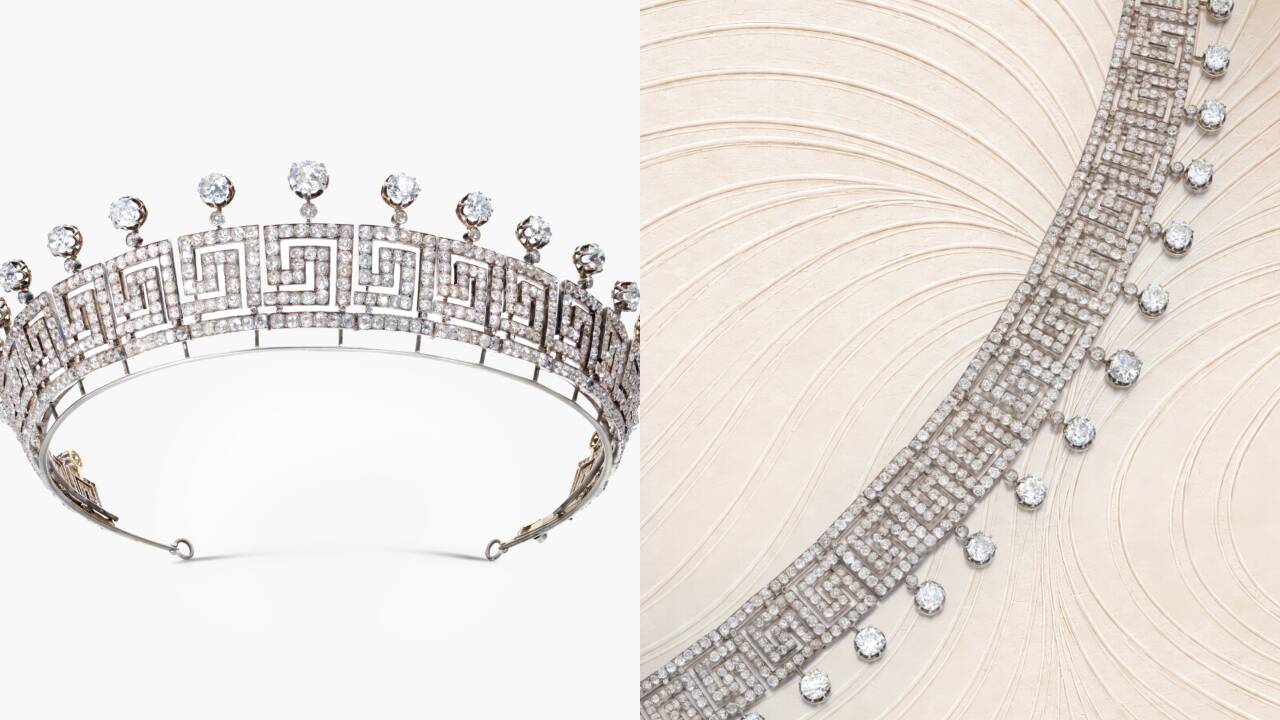
The Mellerio Orléans Tiara dates to around 1862. It was made by Mellerio dits Meller, the oldest jeweller on Place Vendôme in Paris, for the London International Exhibition. It was designed in the Greek Revival style that was popular at the time. The headpiece features a meander pattern, also known as the Greek key design, set with old mine-cut and rose-cut diamonds.
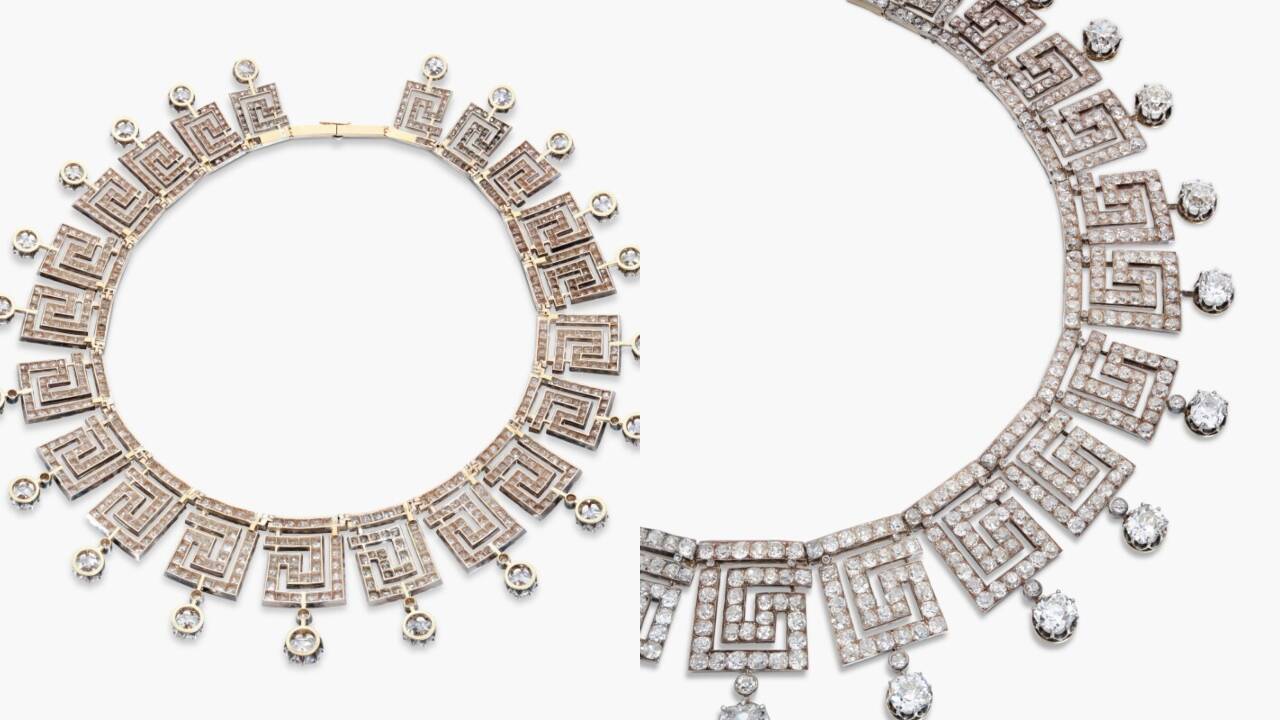
Pic credit: Sotheby’s
Ancient Greek and Roman art influenced the design of the diamond tiara. “This was a direct reflection of Napoleon III’s acquisition of the Campana collection for the Louvre in 1861. The Campana collection was assembled by Giampietro Campana (1809–1880) and encompassed many highly important archaeological finds, including notable ancient jewels. Acquiring part of this collection for the Louvre was an important prestige project for France to establish itself at the vanguard of world culture. Therefore, the timeless Greek key or meander design of the tiara references both classical antiquity and the direct historical context in which it was made, showcasing the glory and prestige of France,” Sotheby’s explains in the listing.The tiara also doubles as a necklace, making it more versatile than most headpieces of its era.
A wedding gift
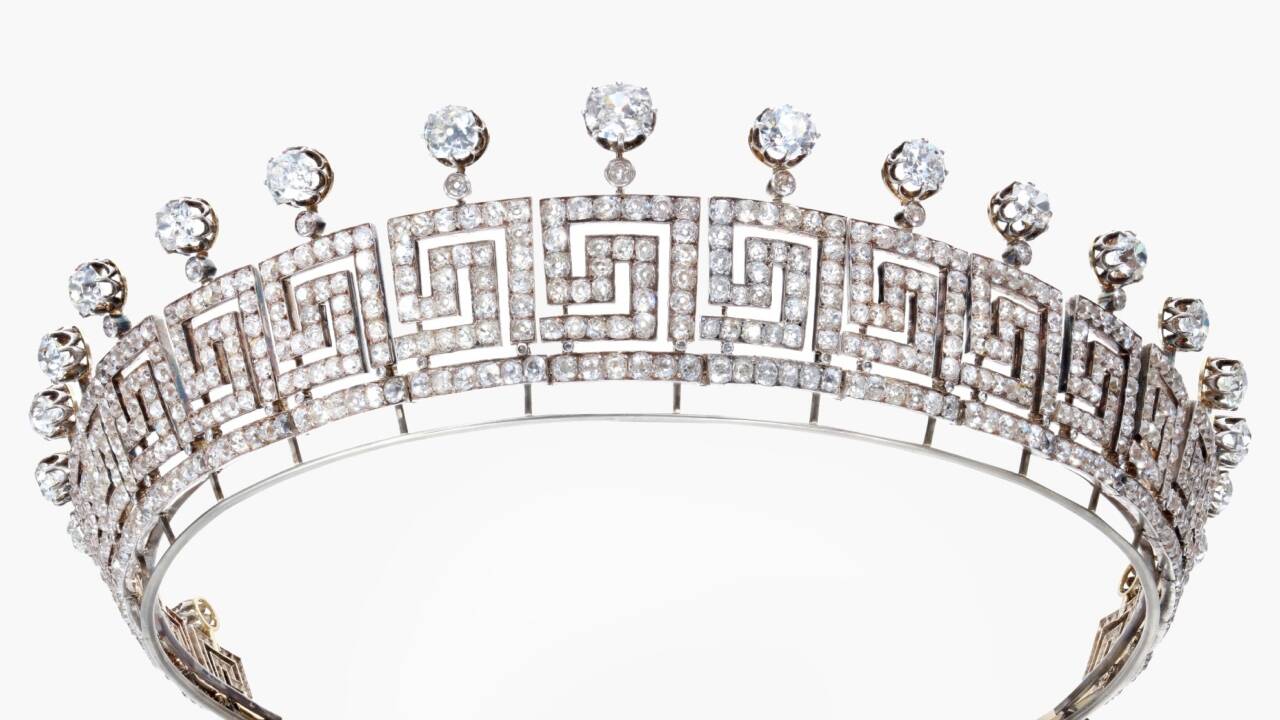
Pic credit: Sotheby’s
Two years after its London debut, Antoine d’Orléans, Duke of Montpensier, bought the tiara. He gifted it to his eldest daughter, Marie Isabelle, for her wedding to her cousin Philippe d’Orléans (1838–1894), the Count of Paris, in 1864. Philippe was an Orléanist claimant to the French throne. Had the monarchy been restored, Marie Isabelle could have become queen. Instead, the diamonds remained in a family that never sat on the throne.Marie Isabelle died in 1919, and her younger son, Ferdinand, inherited the tiara. He married a Spanish aristocrat in 1923, died two years later and left everything to his wife. She died in 1957. After her death, the family learnt that she had secretly married her personal secretary years earlier and left him her estate. The tiara seems to have vanished around that time. After remaining hidden for decades, it has finally resurfaced. Nobody really knows how.
Pic credit: Sotheby’s
The diamond tiara is heading to auction next month. Sotheby’s has set the estimate at 780,000 to 1,100,000 Swiss francs, or roughly $946,000 to $1.33 million. Prospective buyers should note that these are estimates, not guarantees. They serve as a guide, and results often fall above or below them.Recent Geneva sales show how quickly a royal jewel can exceed its estimate. In May 2021, a natural pearl and diamond tiara linked to the House of Savoy sold for $1.6 million, above its pre-sale estimate of $1 million to $1.5 million, according to a report by National Jeweler. Sotheby’s called it one of the most important tiaras to appear on the market in recent years. The sale next month will reveal whether a piece with a long-hidden past can achieve a similar result.