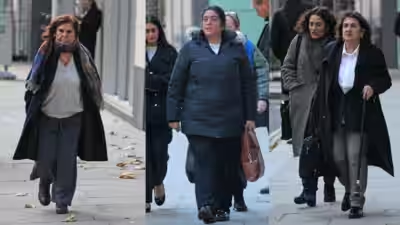
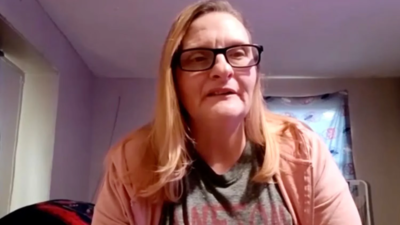
A routine afternoon spent looking after her neighbour’s children ended with Angela Lipps being taken into custody, beginning a chain of events that would keep the Tennessee grandmother away from her family for months. Investigators in North Dakota believed she could be connected to a series of bank thefts, after an AI-powered facial recognition search reportedly flagged her social media photograph as a potential lead in the investigation. Lipps maintained that she had nothing to do with the offences. As reported by ABC News, she was eventually released on Christmas Eve 2025, after producing financial records that placed her in Tennessee when the thefts took place. Now, she is seeking $10 million in damages from a North Dakota city and a police detective, alleging that the investigation led to her wrongful arrest and imprisonment.
How AI facial recognition led to a Tennessee grandmother’s arrest
Lipps, 50, was arrested in July 2025 while caring for her neighbour’s children in Tennessee, according to a federal lawsuit reported by ABC News. The investigation concerned a woman suspected of carrying out thefts at several banks in the Fargo area of North Dakota. Police were looking into a suspect whose image had appeared on a fake identification document used in the incidents. During the investigation, a West Fargo Police Department investigator reportedly used facial recognition software to examine the photograph and received Lipps’ social media picture as a potential match.That identification became an important part of the investigation, although the lawsuit argues that the two women had visible differences. Lipps’ lawyers pointed to differences in their physical build, facial characteristics and tattoos. They also stated that she had never travelled to North Dakota before her arrest. The complaint alleges that investigators failed to properly establish whether Lipps was the woman involved in the bank incidents before pursuing her arrest.
AI facial recognition investigation puts Fargo police under scrutiny
The lawsuit names the city of Fargo and detective Lucas Heck, who allegedly requested the arrest warrant. It raises questions about how information obtained through facial recognition technology was handled as it moved between police departments. According to the complaint, the facial recognition search was conducted by a West Fargo investigator. Heck, however, is not accused of personally operating the software. The allegation against him centres on what he did with the information provided during the investigation.Lipps’ lawyers claim that he failed to carry out sufficient checks or establish adequate probable cause before seeking the warrant. They also allege that the Fargo Police Department did not properly train or supervise officers dealing with facial recognition leads, despite the risks of relying on technology that can produce incorrect identifications. The complaint argues that a possible match should have been treated as an investigative lead rather than sufficient grounds to accuse someone of a crime.
$100,000 bond kept Tennessee grandmother behind bars for months
Following her arrest, Lipps was held at a detention facility in Tennessee while matters relating to alleged probation violations from an unrelated criminal case were addressed. She was subsequently transferred to North Dakota to face multiple bank theft charges. In Cass County, she was ordered to remain in custody on a $100,000 bond, which she could not afford, according to the lawsuit. Her detention continued for months, keeping her away from her family while the allegations against her remained unresolved.Lipps and her attorney eventually presented bank records showing that she had been in Tennessee when the alleged thefts occurred. The prosecution dropped the charges, and she was released on December 24, 2025. For the grandmother, the release did not mean that everything she had left behind was still there. The complaint says she discovered that she had lost her home, vehicle and other personal belongings during her time in detention.
Lawsuit details emotional toll of detention and alleged denial of medication
The legal filing also sets out the conditions Lipps allegedly experienced while being held. It says she was separated from her family for birthdays and holidays, including Thanksgiving and Christmas, and spent her own birthday in custody. Her lawyers claim that she was denied basic necessities, including access to her medication and dentures. The complaint describes the uncertainty surrounding her detention, with Lipps fearing that she could be convicted of offences she had not committed and face years in prison.The experience has also allegedly affected her sense of security since her release. According to the lawsuit, she continues to fear being taken into custody again despite the charges having been dropped. Her legal team is seeking $10 million in damages, citing the arrest, imprisonment, alleged misconduct and the financial and personal losses that followed.Attorney Eric Rice told ABC’s Nashville affiliate WKRN that the amount reflected the harm Lipps had suffered. He also questioned the impact of being taken away from one’s family and held in detention despite maintaining innocence.
Fargo police chief acknowledges errors in facial recognition investigation
The case had already attracted attention before the federal lawsuit was filed. In March 2026, then-Fargo Police Chief Dave Zibolski publicly addressed the investigation after Lipps’ arrest became the subject of wider reporting. He acknowledged that the department had identified errors in the way information was handled. West Fargo officers had reportedly used their facial recognition system to identify Lipps as a possible lead based on the photograph from the fake identification document.However, Fargo detectives mistakenly believed that the facial recognition process had also involved surveillance images from the bank thefts. Zibolski said officers had made an incorrect assumption about what material had been used to identify her. He explained that Fargo’s police department did not operate its own facial recognition system and would ordinarily send unidentified images to the North Dakota State and Local Intelligence Center. The use of West Fargo’s technology in the manner described was not an approved procedure, he said, adding that it had since been prohibited.The department also indicated that it would introduce additional scrutiny before moving similar investigations forward. Zibolski said officers involved were upset by what had happened, while acknowledging that the department’s handling of the case had fallen short.
Fargo faces scrutiny over safeguards in facial recognition investigations
Lipps’ lawsuit argues that the events expose problems with the way police departments use facial recognition results and share investigative information. It seeks accountability from Fargo over the alleged failure to verify the identification before pursuing criminal charges. The complaint also claims that the department knew insufficient oversight of facial recognition investigations could lead to wrongful arrests and prosecutions but failed to put appropriate safeguards in place. However, the City of Fargo and detective Lucas Heck have disputed the allegations. In a court filing on November 16, 2026, they denied that Lipps’ constitutional rights had been violated and rejected claims of unlawful arrest, false imprisonment and malicious prosecution. They have asked a federal judge to dismiss the lawsuit with prejudice and award legal costs and attorneys’ fees.The defendants also acknowledged that Fargo Police Department did not have a formal written policy specifically governing facial recognition technology or provide its own training on its use. They maintained, however, that facial recognition was one of several investigative tools and that officers used other methods to corroborate results.Disclaimer: This article is based on publicly available reports and court filings. The allegations made by Angela Lipps in her lawsuit against the City of Fargo and detective Lucas Heck have not been independently verified by The Times of India.