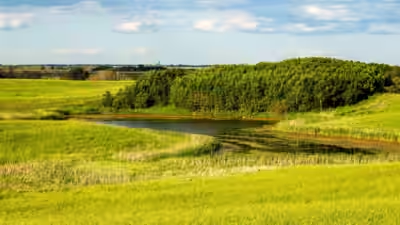
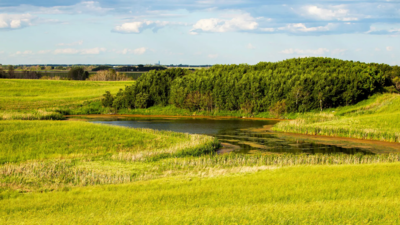
A ranching family in southern Alberta has donated 160 acres of untouched native prairie for permanent protection, more than 100 years after first settling in the region. The land will remain open for cattle grazing, allowing the family’s farming tradition to continue while protecting the natural grassland. The Nature Conservancy of Canada (NCC) announced on 24 November 2026 that the Coppieters family had donated the 65-hectare property, known as Coppieters Acres, along Alberta’s Milk River Ridge. The land is located 17 kilometres southeast of Magrath in Warner County. It will remain protected as native fescue grassland while continuing to support local ranching.“Peter and I have always really appreciated and looked up to people who chose to conserve their land. When we talked about it, we thought this was the best thing we could do with the quarter pasture. We’re happy that it will stay the way it’s always been,” land donor Donna Coppieters said in the Nature Conservancy of Canada announcement.
A century of family stewardship
The family has long referred to the property as the “quarter pasture”. Peter Coppieters Sr. and his wife, Mary, first settled in the region in 1925. They bought land and started the family farm. Their son, Peter, later bought the quarter pasture with his wife, Donna, continuing the family’s care for the property. The land has never been ploughed or used for crops. It has remained natural prairie, where cattle graze and generations of the family have made memories. Donna Coppieters said the property is home to a wide range of wildlife, including elk, deer, pronghorn and many types of birds. Protecting the land will preserve both an important part of the family’s history and an area of native prairie for future generations.
Milk River Ridge and threatened grasslands
Coppieters Acres lies along the Milk River Ridge, which follows Alberta’s southern border between Magrath and Milk River. The area is an important refuge for foothills rough fescue grassland, one of Alberta’s most threatened natural ecosystems. Around 80 per cent of the remaining foothills rough fescue ecosystem is on privately owned land. This makes voluntary conservation efforts by landowners especially important. According to the Nature Conservancy of Canada, the donation builds on earlier conservation work in the region supported by its donors, including McIntyre Ranch and Sandstone Ranch. Water collected along the Milk River Ridge supplies communities and farms across central North America. Water flowing north enters the Oldman watershed and moves across the Prairies towards Hudson Bay. Water flowing south enters the Milk River watershed before travelling through the Missouri and Mississippi rivers to the Gulf of Mexico.
Wildlife and carbon storage on the land
About 87 per cent of the 65-hectare property is covered by native fescue grassland. The remaining area consists of wetlands and areas beside rivers and streams. These natural areas help store and filter water before it reaches downstream watersheds. Field surveys conducted in 2026 recorded bobolinks on the property. The bird is listed as a species of special concern in Canada, and its Canadian population has fallen by about 80 per cent since 1970, according to the Nature Conservancy of Canada. Survey teams also confirmed the presence of hoary bats and silver-haired bats. Both are listed as sensitive in Alberta and have been recommended for Endangered status by the Committee on the Status of Endangered Wildlife in Canada (COSEWIC). Five other species of concern, all listed as sensitive in Alberta, were also recorded in the project area. They are Brewer’s sparrow, eastern kingbird, plains garter snake, sharp-tailed grouse and upland sandpiper.The protected prairie also provides benefits beyond wildlife habitat. Natural grasslands help filter water and support pollinating insects. These insects contribute an estimated $3 billion each year in ecosystem service value to prairie crop production, according to the Nature Conservancy of Canada. Alberta’s native fescue grasslands also store large amounts of carbon. They can hold up to 200 tonnes of carbon per hectare in the top metre of soil. The Nature Conservancy of Canada estimates that about 11,400 tonnes of carbon are stored beneath Coppieters Acres. This is similar to the annual emissions produced by nearly 14,000 cars. The wider loss of prairie grasslands has also been significant. Figures from the Nature Conservancy of Canada show that Canada has lost more than 80 per cent of its prairie grasslands since European settlement. Around 60,000 hectares are still lost each year, while less than 6 per cent of the remaining grasslands are formally protected.
Grazing stays part of the plan
The donation combines permanent protection of the natural habitat with continued ranching. Carefully managed cattle grazing helps keep prairie landscapes open, supports a variety of native plants and contributes to the rural economy.“Milk River Ridge is one of the most intact grassland landscapes left in Alberta, and every hectare that stays whole matters. The Coppieters family’s gift is exactly the kind of local stewardship that keeps these grasslands healthy, working and connected for the ranchers, wildlife and communities who depend on them,” said Tom Lynch-Staunton, regional vice president for the Nature Conservancy of Canada.The organisation’s stewardship staff will assess the property and prepare a management plan to guide future grazing. This will include checking the health of the grassland and managing invasive species. The Nature Conservancy of Canada said the project was made possible by the Coppieters family, with support from Cenovus through the Conserving Critical Wetlands Program.