
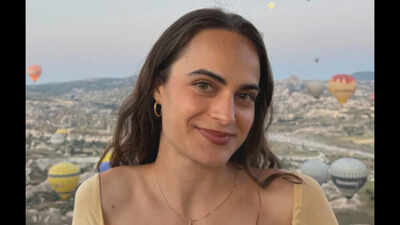
A 24-year-old Canadian woman who travelled to Turkey to celebrate her medical school graduation died suddenly in an Istanbul hotel, with a new investigation raising questions about whether she was exposed to a highly toxic pesticide used to kill bedbugs. Bérengère Deveaux-Cattino, from Montreal, died on June 17, 2025, after falling seriously ill during a holiday with friends. A Turkish autopsy attributed her death to food poisoning, but her family has challenged the findings, saying the explanation does not match the circumstances of her sudden deterioration.A joint investigation by CBC’s The Fifth Estate and Radio-Canada’s Enquête, published on November 20, 2026, has raised the possibility that she was exposed to phosphine gas, a deadly substance released by aluminium phosphide, a pesticide used to kill insects and rodents.The investigation also documented nearly 30 cases of phosphine poisoning in Turkey since 2023, including around 12 deaths.Bérengère had recently graduated from medical school and travelled to Turkey with a group of close friends to celebrate. After visiting Cappadocia, she and a friend headed to Istanbul for the final two days of their trip. The two women checked into Room 108 at the Seven Days Hotel and spent the day sightseeing. They later ate a chicken casserole, followed by Turkish tea and baklava.The following morning, both woke up violently ill. Bérengère’s travelling companion, identified by CBC under the pseudonym Laurie, said the young woman began vomiting within minutes of waking up. Laurie soon developed similar symptoms. The two women repeatedly rushed to the bathroom before realising that their condition was not improving. They contacted the hotel reception, and an ambulance took them to hospital.Back in Montreal, Bérengère’s sister Éléonore received a FaceTime call from Laurie, who told her that they were in a hospital in Istanbul and that things were not looking good. Éléonore and her father, Henri Cattino, immediately began arranging flights to Turkey. While waiting for a connecting flight in Paris, she contacted the Canadian embassy to ask whether her sister had died. She was informed that Bérengère was dead.
Family questions food poisoning diagnosis
The Turkish autopsy report, received by the family shortly before Christmas 2025, concluded that food poisoning had caused Bérengère’s death. However, her relatives were unconvinced and asked Quebec authorities to examine the findings.Her sister said the Quebec coroner could not confirm food poisoning as the cause because there were no signs of intestinal irritation, which would typically be expected in such cases.A Quebec pathologist who reviewed the Turkish report also questioned the conclusion, pointing to how quickly Bérengère’s condition had deteriorated.Turkish forensic pathologist Şebnem Korur Fincancı, a professor emeritus and human rights activist, also reviewed the autopsy findings for the CBC investigation. “This is not food poisoning,” she said, suggesting that pesticide exposure was a more likely explanation. She pointed to metabolic acidosis, a condition in which excessive acid builds up in the body, as a significant indicator of possible phosphine poisoning. Still, pesticide exposure has not been officially established as the cause of Bérengère’s death.
Hotel’s neighbouring room had bedbug complaints
The investigation uncovered a potentially significant detail about the hotel where the two women stayed. CBC journalists examined hundreds of online reviews of the Seven Days Hotel and found a complaint from a tourist who claimed he had suffered around 150 bedbug bites during his stay in June 2025.The man confirmed that he had occupied Room 107, immediately next to Room 108, where Bérengère and Laurie stayed around 10 days later. The windows of the two rooms opened towards each other. This raised questions about whether Room 107 had undergone chemical treatment to eliminate bedbugs before the women arrived.Hotel manager Bahattin Demir confirmed that the hotel regularly hired exterminators to spray its rooms. But he dismissed any link between the pesticide and the death. The pest control company, identified as Wolves, was also contacted by the journalists. During an undercover conversation, an employee described a treatment in which rooms had to remain sealed and unoccupied for 72 hours. The description resembled the use of aluminium phosphide, although the employee did not identify the chemical. When approached directly, the company denied using aluminium phosphide.The investigation also found that the women had initially kept their hotel window open but closed it the following evening and switched on the air conditioning. They became ill the next morning. Asked whether phosphine gas could accumulate in an air-conditioning system, forensic pathologist Fincancı said it was possible.
Four-member family also died from phosphine poisoning in Istanbul
Bérengère’s death came into focus again after another tragedy involving a family of four in Istanbul in November 2025. The Böcek family, a Turkish-German family from Hamburg, fell ill during their stay in the city. All four members died within days. Investigators initially suspected food poisoning but determined that the family had been exposed to phosphine gas released during fumigation in a neighbouring hotel room. The pesticide involved was aluminium phosphide, which releases highly toxic phosphine gas when exposed to moisture. The chemical is used to kill rodents and insects, but its use in urban areas in Turkey is illegal. In June 2026, the owners of the extermination company involved in the Böcek family’s deaths were sentenced to 18 years in prison. The hotel owner and employees received prison sentences ranging from 12 to 13 yearsCBC and Radio-Canada documented nearly 30 phosphine poisoning cases in Turkey since 2023, including approximately 12 deaths. Many of the victims were women and children, and several cases were initially suspected to be food poisoning.
Canada issues travel warning over chemical poisoning
In September 2026, Canada updated its travel advisory for Turkey, warning travellers about cases of poisoning linked to chemical pesticides used in tourist accommodations in Istanbul. Following the broadcast of the CBC investigation on October 15, 2026, Turkish consular officials contacted the broadcaster and confirmed that the investigation into Bérengère’s death remained open, the CBC report said.