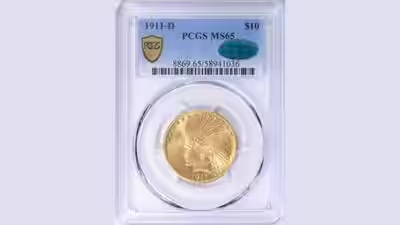
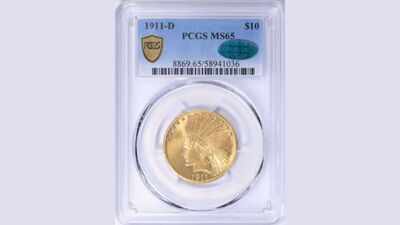
A $10 gold coin struck at the Denver Mint in 1911 spent decades in a paper envelope inside a family safe deposit box, apparently unnoticed among a group of ordinary inherited coins. In 2026, the heirs had it graded and discovered that it was a rare 1911-D Indian Gold Eagle, one of the finest known examples of the date, according to GreatCollections and CoinWeek.The coin, graded PCGS MS 65 and approved by Certified Acceptance Corporation with a green sticker, is now being offered without reserve in a GreatCollections auction closing January 10, 2027. GreatCollections expects it to bring more than $500,000, and bidding had already reached $107,500 after 19 bids as of November 17.
A coin hiding in plain sight
The family inherited roughly three dozen common, low grade pre 1933 American gold coins from a relative who worked for the CIA during the 1950s. Among them was the 1911-D $10 Indian Gold Eagle, which remained uncertified in an old paper envelope until earlier this year.GreatCollections president Ian Russell said the coin had been kept in the safe deposit box for years without anyone recognising its importance. He noted that the family had not said who the former CIA employee was or when the coin was purchased, and that nothing tied the coin itself to intelligence work.When PCGS examined the coin in 2026, it awarded an MS 65 grade, and CAC approved it with its coveted green sticker. GreatCollections describes the result as the second finest CAC endorsed example of the date.
Why the coin is rare
The 1911-D Indian Gold Eagle is the lowest mintage regular issue in the Indian Head eagle series, with only 30,100 coins struck at the Denver Mint. PCGS estimates that about 1,650 examples survive across all grades, including roughly 275 in Mint State.Only five examples are believed to grade MS 65 or finer, according to PCGS estimates cited by CoinWeek. That scarcity helps explain why the newly discovered coin has drawn attention from collectors and auction watchers.The coin was designed by Augustus Saint Gaudens and weighs 16.718 grams, with a composition of 90 percent gold and 10 percent copper. Its Denver mintmark appears on the reverse near the left side of the arrow bundle.
How the value was determined
The newly discovered example carries a PCGS Price Guide valuation of $425,000, but GreatCollections expects it to sell for more. The auction house says the final price will depend on competitive bidding.The last PCGS MS 65 example of this date to sell at public auction brought $195,500 in 2007, according to PCGS CoinFacts. A separate 1911-D Indian Gold Eagle graded PCGS MS 66 with CAC and CMQ sold for $1.8 million in February 2026, setting a record for any circulation strike Indian Head $10.Those results help frame expectations for the current coin. While it is not the same grade as the $1.8 million example, its MS 65 status and CAC approval place it among the most desirable survivors of the date.
What makes this discovery notable
The story stands out because the coin was not part of a high profile collection or a museum archive. It was sitting in a paper envelope inside a family safe deposit box, alongside coins that were considered common and low grade.That context makes the discovery more relatable. It shows how a valuable item can remain hidden in plain sight until someone decides to have it examined by a professional grading service.The case also highlights the importance of certification. Before grading, the coin looked like an ordinary inherited gold piece. After PCGS and CAC assessed it, it became one of the most important gold coins on the auction calendar.
What happens next
The coin is being offered without reserve, meaning there is no minimum price that must be met for it to sell. Bidding is scheduled to close on Sunday, January 10, 2027, at 6:30 p.m. Pacific Time.As of November 17, bidding had reached $107,500 after 19 bids. The final result will show whether the market agrees with GreatCollections’ expectation that the coin will bring more than $500,000.For the family, the discovery is a reminder that inherited items can carry unexpected value. For collectors, it is a chance to acquire a rare piece of American gold coinage with a documented history of survival in a safe deposit box.