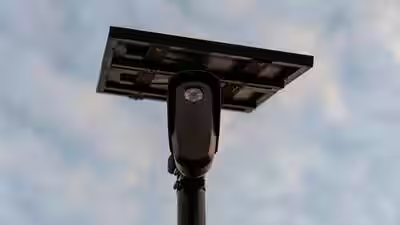
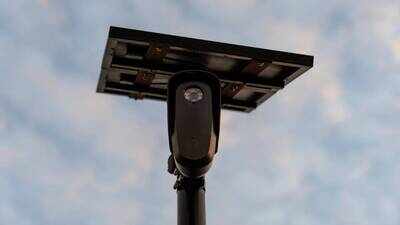
The University of Michigan Police Department (UMPD) signed a $127,500 contract with surveillance technology company Flock Safety to acquire automated licence plate reader cameras, but the equipment was never installed or put into use, according to records obtained through a Freedom of Information Act (FOIA) request. The revelation has raised fresh questions about the university’s surveillance plans, data privacy and the growing use of automated monitoring technology on American campuses.According to a report by The Michigan Daily, the agreement was signed on February 3, 2025, by Jennifer Carr, a University of Michigan procurement agent, on behalf of the police department. Mark Smith, Flock Safety’s general counsel, signed the contract for the company. The agreement was not publicly announced at the time.UMPD later confirmed that the 15 cameras covered under the deal were neither installed nor operational.
What did the University of Michigan’s $127,500 Flock Safety deal include?
Under the agreement, the university committed to paying $63,750 annually, amounting to $127,500 over an initial 24-month period. The contract covered 15 Falcon Flex cameras, described as law-enforcement-grade tactical deployment equipment, along with FlockOS Essentials software, Vehicle Fingerprint artificial intelligence technology and 15 battery packs.However, it remains unclear whether the university ever made the payment.Unlike conventional security cameras, automated licence plate readers scan passing vehicles and compare their registration numbers against databases containing information about stolen vehicles, outstanding warrants and other law enforcement watchlists.The technology also records details such as a vehicle’s make, model, colour, distinguishing features, bumper stickers, roof racks and visible damage. This information can be used to build a searchable record of where a vehicle has travelled over time.The Falcon Flex cameras covered under the agreement were designed to capture vehicles from the rear. They were not intended to monitor pedestrians, sidewalks or intersections.
Cameras could have enabled extensive vehicle tracking and data sharing
One of the key concerns surrounding the agreement is the extent of surveillance and data-sharing capabilities offered by Flock’s technology.The contract allowed the cameras to be used for any “legitimate public safety and/or business purpose”, including the “prevention of commercial harm”, as outlined in Section 1.14. It did not specify where the 15 cameras were supposed to be installed.The agreement also included provisions for data retention and sharing. Under its terms, information collected by the cameras would automatically be deleted after 30 days unless UMPD manually archived it. However, Flock has since reduced its company-wide default data retention period to seven days.Another provision, Section 5.3, allowed Flock to disclose footage to law enforcement agencies, government officials or third parties without a warrant if the company had a “good faith belief” that such disclosure was legally necessary.The FlockOS platform also offered access to statewide and nationwide searches, along with a Community Network comprising privately owned cameras. Although it remains unclear whether UMPD ever activated these features, the agreement could have allowed the department to search vehicle registration numbers across participating Flock camera networks.The arrangement also involved reciprocal access, meaning other participating government, law enforcement and private agencies could potentially have searched data captured by UMPD’s 15 cameras.
University expands campus surveillance amid concerns over privacy

UMPD confirmed that all 15 Flock Safety cameras covered under the $127,500 agreement remain uninstalled and are not currently in use. (Photo: AP)
The Flock Safety agreement came at a time when the University of Michigan was making significant changes to its campus security infrastructure.During the summer of 2025, the university’s Division of Public Safety and Security installed surveillance cameras at the entrances of most campus buildings, as well as in the Law Quad and the Diag.The expansion prompted concerns among some members of the university community, particularly against the backdrop of pro-Palestine protests during the 2024-2025 academic year, which were met with force by UMPD.In the autumn of 2025, the university formally launched the Security Technology Enhancement Project, a large-scale initiative aimed at modernising physical security and emergency communication infrastructure across all three campuses.Around the same period, the university revised its institutional policies, removing explicit restrictions on the use of surveillance cameras and eliminating requirements for a student and faculty security oversight committee. The Michigan Daily also reported that the committee appeared not to have been meeting as required.These developments have raised questions about the extent of surveillance on campus and the safeguards available to protect students’ privacy.
Law professor and students raise concerns over surveillance
Law professor Michael Steinberg expressed concern that the growing use of surveillance technology could fundamentally change how security is maintained on campus.“The major issue is that we’ve moved from investigating suspects to collecting information about everyone,” Steinberg said.He added that he feared the University of Michigan was moving towards a system in which campus-wide surveillance could become the norm.LSA senior Radha Tanner, co-chair of the American Civil Liberties Union at the university, also questioned the potential misuse of Flock’s data-sharing capabilities.“It’s not the issue of the cameras as they are, but more so how they are being used and by who to do what,” Tanner said.She further argued that the technology’s lack of adequate regulation could leave room for misuse and exploitation, extending its applications beyond legitimate law enforcement requirements such as tracking stolen vehicles or assisting in missing persons investigations.
What has the University of Michigan said about the Flock Safety contract?
Responding to questions from The Michigan Daily, UMPD deputy chief of police Melissa Overton said the department selected Flock Safety to address public safety requirements and investigative needs.“UMPD selected Flock Safety as a tool to support legitimate public safety and investigative needs; the acquisition was not prompted by any single specific security concern,” Overton wrote in an email.She also clarified that the agreement had gone through the university’s procurement and contracting procedures and did not require approval from the Board of Regents or a separate public approval process.Importantly, Overton confirmed that the cameras had never been installed or activated.“The 15 Falcon Flex cameras referenced in the agreement are not currently installed or in use,” she wrote.However, she did not explain why the university ultimately decided against installing the equipment or when that decision was made.
Flock Safety faces wider scrutiny over surveillance technology
The controversy surrounding the University of Michigan’s agreement comes amid a broader national debate in the United States over automated licence plate readers and the growing use of surveillance technology.Flock Safety has faced increasing scrutiny over concerns about data-sharing practices, privacy safeguards and the possibility of information being accessed or used beyond its original public safety purpose.Lawmakers in Michigan from both political parties have also called for tighter regulations governing Flock cameras.While the University of Michigan maintains that its 15-camera agreement remains unused, the contract has brought attention to the extent of surveillance capabilities it had agreed to procure, including access to wider networks of cameras and vehicle movement data.The episode has also raised a larger question about the balance between campus security and individual privacy, particularly when surveillance systems have the potential to collect information on people who are not suspected of any wrongdoing.