What if one day you discover the world has no butterflies? Their velvety wings, dashing through the garden, a moving pop of colour in a world of darkness.Butterflies are not just there for aesthetic purposes. Their most important job is pollinating; a reduction in butterfly populations can mean a reduction in plant diversity, since wild plants and flowers will struggle to reproduce. They are also sensitive to environmental shifts. As bioindicators, they can help assess the health of the environment.In Canada, a species of butterfly disappeared from Ontario in 1988 and has not been recorded there since. But now, nearly four decades later, it could flutter back. Scientists are preparing to bring it back, with plans to breed the butterflies in captivity and release them into restored habitats in the province.
US Midterm Election Results 2026
Which butterfly species has disappeared from Ontario?
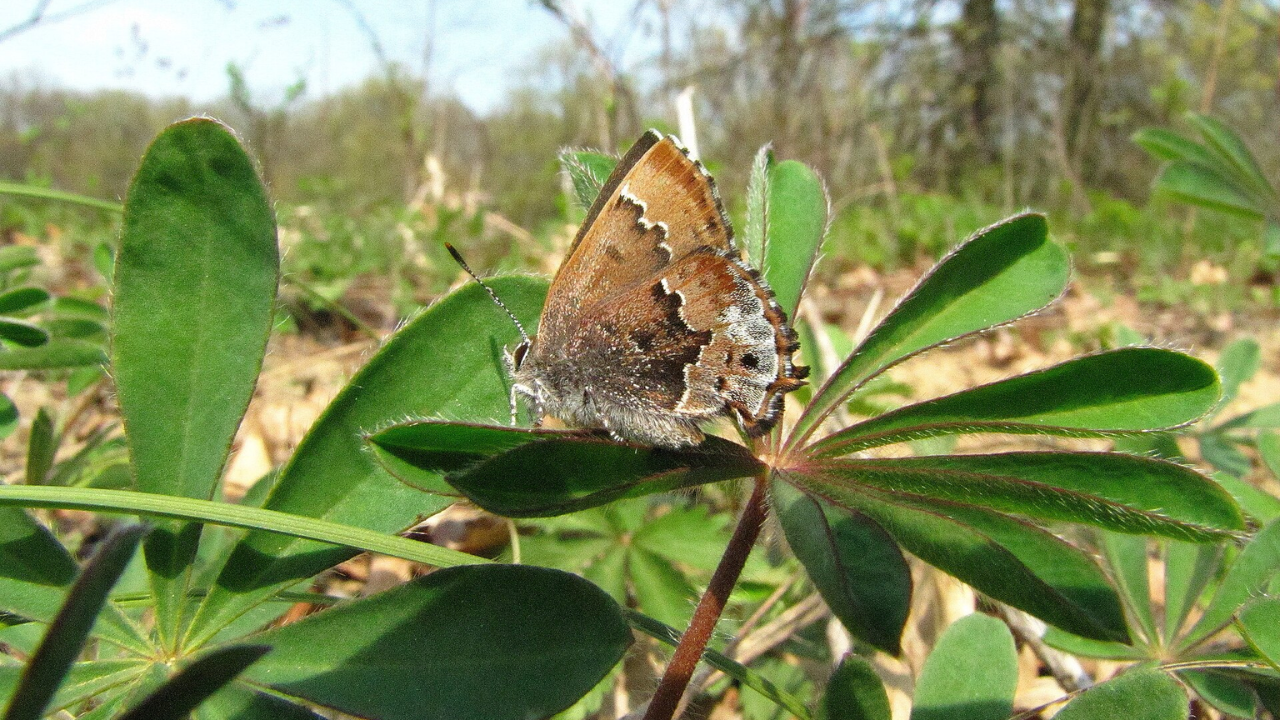
Image Credits: WikiMedia Commons
Meet the frosted elfin (Callophrys irus), a small, rather understated butterfly with delicate wings and a greyish-brown hue. Unlike its more flamboyant cousins, this species is not particularly colourful. Its wingspan measures just 22 to 24 mm, making it easy to miss if you are not looking closely.The butterfly was historically found in southern Ontario, particularly around St. Williams, near the northern shores of Lake Erie. It favours open oak-pine woodlands and nearby clearings where its preferred food plant, wild lupine, grows.The frosted elfin is also a non-migratory species, meaning it does not travel long distances. It depends on its existing habitat, unable to escape unfavourable conditions; thus making the loss of its natural surroundings particularly difficult to overcome.According to the Committee on the Status of Endangered Wildlife in Canada, several surveys, including one conducted in 2019, failed to find any trace of the butterfly. Its disappearance is largely attributed to habitat destruction caused by urban development and the conversion of natural landscapes into farmland. As oak savannas and open woodlands gave way to buildings and agricultural fields, the butterfly gradually lost the very environment it needed to survive. While it is still found in parts of the northeastern United States, it has completely disappeared from Ontario.The frosted elfin is not the only butterfly to have made headlines after years of absence. In August 2025, a zebra swallowtail was spotted in Toronto’s High Park, attracting considerable attention from butterfly enthusiasts. The striking black-and-white butterfly, recognisable by its long, pointed wings, was last recorded in High Park in 1896. Its most recent recorded appearance in Toronto was in 1952.
Scientists’ plan to bring back the Frosted Elfin
Now a group of Canadian scientists, led by the University of Guelph, is trying to restore the frosted elfin to Ontario. Led by ecologist Ryan Norris, the project will transport adult butterflies and their eggs from New York to the Cambridge Butterfly Conservatory, where they will be bred in captivity and then released into the wild.The first release is planned for spring 2027 in Port Rowan, in Norfolk County, southeast of London, Ontario. However, before the butterflies can make their return, researchers need to ensure that their new home is ready to welcome them, mainly ensuring that there are sufficient wild lupine plants to support the caterpillars once they hatch.The proposed release sites include restored habitats, that were once old tobacco fields but have since developed into thriving oak savanna landscapes. These open woodlands provide the conditions the frosted elfin needs to survive, offering both shelter and access to its host plant.The reintroduction is part of a larger, $2.4-million conservation initiative funded by the federal government through an NSERC Alliance-Society grant. The project aims to recover three at-risk butterfly species across Canada: the frosted elfin, the mottled duskywing and the curiously isolated hairstreak.There is already some encouraging news. The mottled duskywing, a medium-sized butterfly with dark grey and brown wings, was reintroduced at Pinery Provincial Park and other protected areas in Norfolk County around five years ago. Its population has since grown to several hundred at Pinery and close to 100 at another location. Researchers have even spotted the butterflies spreading into nearby campsites and areas outside their regular monitoring sites.The team is also working to strengthen the population of the curiously isolated hairstreak, a rare species found in Waterton Lakes National Park in southern Alberta. With its entire known population concentrated in one location, the butterfly remains vulnerable to natural disasters and other environmental disturbances. Researchers are exploring whether it can be introduced to other suitable habitats.Ultimately, restoring the butterflies means restoring the ecosystems they depend on. Butterflies are one of the most important part of the ecosystem and are essential to a healthy environment. Their disappearance is often a warning that something much larger has gone wrong.