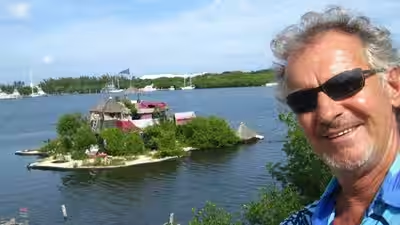
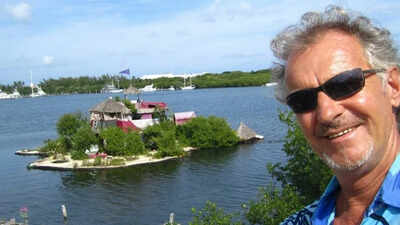
British artist Richart Sowa spent years collecting plastic bottles for a project most people would never attempt: building an entire island to live on. The result, called Joyxee Island, floated roughly 30 yards off the coast of Isla Mujeres, a small island off Mexico’s Caribbean coast, with its base built from nets stuffed with more than 100,000 plastic bottles. On top of that floating foundation, Sowa built a genuinely functional home, complete with a solar-powered electrical system, a washing machine driven by wave motion, 2 swimming ponds, a waterfall and even an internet connection. He lived there with his wife and dog inside a 3-story house, an achievement that made Joyxee one of the more unusual owner-built homes anywhere in the world, and one built almost entirely from material most people simply throw away. The unusual project also attracted international attention, drawing curious visitors eager to see how discarded household waste could be transformed into a floating home.
How Richart Sowa built Joyxee Island after losing his first bottle island to a hurricane
Joyxee was not Sowa’s first attempt at building a home out of plastic bottles. His original project, called Spiral Island, was built in 1998 in a lagoon near Puerto Aventuras, after Sowa went through a period of soul-searching following the end of his first marriage and decided that living on a floating bottle island was genuinely what he wanted for his life. He stayed there with his 2 dogs until 2005, when Hurricane Emily destroyed the island entirely. Rather than abandon the idea, Sowa spent the following years collecting a fresh supply of bottles and began construction on Joyxee Island in late 2007, finishing the project by the end of 2008.
What living on an 8,000-square-foot island made of recycled bottles actually looked like
Once finished, Joyxee Island covered roughly 8,000 square feet and opened for public tours, with visitors able to reach the island using an 8-person barge Sowa had also built out of recycled bottles. Sowa designed the island with genuine self-sufficiency in mind, growing his own vegetables and herbs on site rather than treating the project purely as an art installation. The combination of solar power, wave-powered laundry and homegrown food meant the island functioned as an actual working household rather than a novelty structure, a detail that set Joyxee apart from many other bottle-based art projects that exist mainly to be photographed rather than lived in.
Why Joyxee Island no longer exists today
Joyxee Island’s story did not end the way Sowa likely hoped. According to Atlas Obscura, the island was damaged by storms in the years after it opened, and local authorities eventually required Sowa to remove it entirely, with the site confirmed gone as of a January 2019 update. Joyxee now exists only as a documented piece of history rather than a place visitors can still travel to, joining a small category of ambitious, owner-built structures that succumbed to the same coastal weather conditions that made their original construction so unusual in the first place. Sowa’s 2 attempts at building a livable island out of plastic bottles remain a striking example of turning ordinary waste into genuine architecture, even if neither structure ultimately survived the Caribbean’s storm season for good.