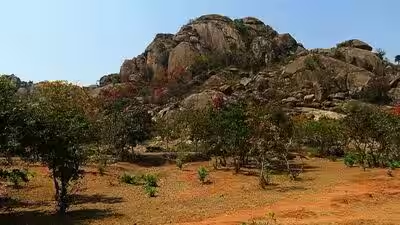
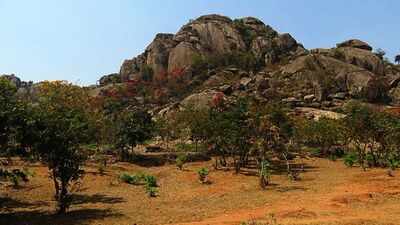
Evidence of the oldest life on Earth has been discovered in India. In recent scientific findings in eastern India, biological traces buried for almost 3.5 billion years were revealed. The revelation suggests a much more distant and organic origin for the planet.The samples were taken from the Singhbhum geological block, which preserves cellular remains trapped between layers of volcanic ash. Dark, carbon-rich bands alternate with pale silica, preserving a layered record of the environment in which the rock formed. The material survived almost intact through multiple terrestrial mechanical transformations. A team of international scientists conducted spectroscopic analyses to confirm the presence of photosynthetic processes and complex metabolic pathways. The primordial microorganisms thrived due to the heat from the ancient, silica-rich underwater hydrothermal vents, which make up a unique ecosystem.According to the findings, the discovery could be the oldest evidence of organic life ever dated in a rock: it would be biological matter from 3.497 billion years ago, corresponding to the paleoarcane. This geological era lasted 400 million years, from 3.6 billion years ago to 3.2 billion years ago. Moreover, it contains the oldest known microfossils and traces of bacteria on Earth.The research was published in the journal Proceedings of the National Academy of Sciences of the United States. It described the findings, dated through lead isotopes found in zircon crystals present in rocks from the Singhbhum craton, an ancient, well-preserved fragment of the continental crust located in eastern India.The Bhitardari chert comes from the Singhbhum Craton in eastern India, a region of ancient continental crust. The region was then covered by a sea where volcanoes and hot water moving beneath the seafloor supplied silica and iron. As sediment hardened, carbon-rich material became trapped between bands of quartz less than a millimetre thick. Because chert rarely contains minerals that geologists can date directly, eight zircon crystals embedded in this sample gave the team a way to determine its ageThe characteristics of the zircon grains, which were used to date the rock, indicate that they were deposited as part of a rain of volcanic ash that settled on sediments at the time of its deposition. Researchers believe that the microbial mat formed by these grains has been able to survive all the geological processes that have occurred on the planet in the last 3.5 billion years.
Science confirms the biosignature
The team used Raman spectroscopy, which has the ability to non-destructively probe multi-layered materials and carbon isotope analysis, it has been observed that the material offers “values compatible with a biological origin.”Carbon comes in several forms, called isotopes. Living organisms tend to use more of the lighter carbon-12 than the heavier carbon-13, leaving a chemical pattern behind. The balance in the Bhitardari chert matches a pattern often left by carbon fixation, the process organisms use to turn carbon dioxide into material for growth. This would imply that there was already primitive life on Earth some 3.5 billion years ago, as evidenced by the existence of complex and relatively sophisticated metabolic pathways, such as the Calvin cycle (photosynthesis) or the acetyl-CoA pathway, an intermediary molecule in the cellular metabolism of proteins, carbohydrates and lipids.“Ancient marine systems, rich in iron and silica and closely linked to volcanic and hydrothermal activity, were fully viable environments capable of providing the nutrients and chemicals necessary to sustain the first microbial ecosystems on our planet,” the authors, affiliated with centres in India, France, the Netherlands, the United States, and Oman, emphasise.Prior to this discovery in the Singhbhum craton, which now becomes the oldest directly dated rock with a confirmed biosignature, researchers had documented several candidates for being the oldest organic matter in sedimentary remains in Australia, Greenland and South Africa.Unlike fossils found in Greenland or Australia, the Asian chemical signature is irrefutable. The surrounding zircons allowed for precise verification of the ecosystem’s true age.