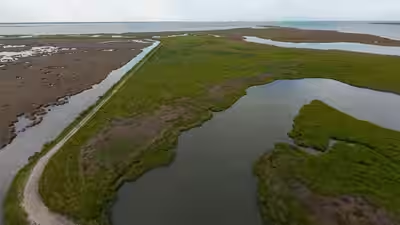
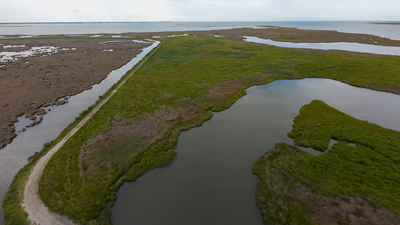
A $13.5 million restoration project in Somerset County, Maryland, has successfully turned dredged river sediment into about 70 acres of tidal wetland habitat, according to the US Army Corps of Engineers Baltimore District Website.The project at the Deal Island Wildlife Management Area was carried out by the U.S. Army Corps of Engineers (USACE) Baltimore District with help from state and regional partners. The work transformed an eroding marsh into higher ground that provides important nesting habitat for threatened marsh birds while also helping keep a major commercial shipping channel open.The project used sand, silt, and shell removed from the lower part of the Wicomico River federal navigation channel, about five miles from the restoration site.The Wicomico River is an important shallow-water commercial route leading to the Port of Salisbury. The port is Maryland’s second-largest commercial port by volume and handles important shipments of petroleum and grain for the Delmarva Peninsula.Regular dredging is needed to keep the river channel at its authorized depth of 14 feet.Instead of dumping the dredged material on land or offshore, the USACE Baltimore District worked with the Maryland Department of Natural Resources, Wicomico County, the U.S. Fish and Wildlife Service, and Audubon Mid-Atlantic to reuse the material and strengthen the declining marsh.“It’s one of our longest shallow-draft channels, used primarily for agriculture and fuel shipments up to Salisbury,” said Kevin Fenyak, a project manager with the USACE Baltimore District Navigation Section.“We just did the lower half this time. We took the material out with a hydraulic dredge and pumped it about five miles via pipeline to the marsh here.”
Rebuilding the marsh
USACE awarded the $13.5 million contract for the dredging and restoration work in September 2022. A local contractor carried out the project and obtained native plants from local growers.Dredging began in October 2023 and continued through the winter. Crews pumped about 166,000 cubic yards of sediment directly onto the area being restored.Workers built containment barriers using straw bales and tidal plugs. These structures held the wet sediment in place and allowed it to settle.Some containment structures were damaged during the 2023 hurricane season, but crews repaired them quickly and kept the project on schedule.“Once inflow was done and the material had time to settle, we had raised the marsh by roughly a foot overall, which was part of the project objective,” Fenyak explained.After the sediment settled, contractors drilled holes into the newly raised marsh and planted native salt marsh grasses. The plants included Spartina alterniflora, Spartina patens, Spartina cynosuroides, and Distichlis spicata.“We had contractors come in and drill plugs so they could plant native salt marsh grasses, mostly Spartina, but a few other species too,” Fenyak said. “Drilling the holes gave the plants a better chance to take hold and adapt to the environment.”
Protecting threatened birds
The native grasses help hold the new sediment in place, reduce coastal erosion, and filter runoff before it reaches the Chesapeake Bay.The raised wetland was also designed to provide better nesting conditions for the saltmarsh sparrow and black rail. Both species depend on high tidal marshes, which are increasingly threatened by rising sea levels.The Deal Island Wildlife Management Area is also home to large breeding populations of herons, egrets, and ibis. It supports one of Maryland’s few breeding populations of black-necked stilts.Planting was completed in May 2025, marking the end of active construction by USACE. Long-term management and wildlife monitoring have now been handed over to the Maryland Department of Natural Resources and Wicomico County.Under a 2022 agreement, local authorities will monitor plant survival and wildlife use of the restored area for up to five years.
Strengthening the Chesapeake Bay shoreline
Fenyak said projects like this are becoming increasingly important as coastal areas around the Chesapeake Bay continue to erode.“It’s important to stabilize the coastlines of the Chesapeake Bay. They’re constantly eroding from natural processes, weather, hurricanes, anything like that,” Fenyak said.“By putting the material back on these marshlands and fortifying and strengthening them, we’re preserving them not only for the native species, but for people and recreation as well.”The restored 70-acre area now provides nesting and feeding habitat for coastal wildlife while helping protect the shoreline.The project also demonstrates how material removed during necessary dredging can be put to beneficial use instead of being treated as waste. By using the sediment to rebuild wetlands, the project helps maintain commercial navigation while also protecting wildlife and strengthening Maryland’s coastal environment.Reflecting on the completed project, Fenyak said his favorite part was spending time in the restored marsh and enjoying the quiet surroundings and wildlife.