For 25,000 years, the GunaiKurnai (an Australian Aboriginal nation) people carried grass into Cloggs Cave and burned it. Archaeologists have finally found physical evidence that proves the ritual existed. These people burned the grass as part of rituals tied to magic, healing and the spiritual realm. Researchers unearthed layers of ash rich in phytoliths, microscopic silica remains from plants, that prove the ritual persisted from the last Ice Age to the 19th century. The findings are published in the journal Frontiers in Environmental Archaeology.
Smoke and spirit
Cloggs Cave has long been a sacred place for the GunaiKurnai First Nations people, the acknowledged traditional custodians of Gippsland and the southern Victorian Alps. The researchers analysed phytoliths collected from archaeological pits dug in the cave and found that almost all (up to 97%) came from grass, with about 18% melted or burnt, clearly indicating that the grass was purposely carried in by people.Ethnographers and oral traditions have described similar rituals using ash from burnt plants that took place across GunaiKurnai Country during the 19th century. Researchers say grass was burned around a small standing stone approximately 2,000 years ago, likely as part of ritual activity. Archaeological studies have suggested that people have been visiting this cave for similar reasons for the past 25,000 years.“Here we show that the Old Ancestors selected whole grasses from the wider landscape and carried them into Cloggs Cave to spread out in thin layers and burn. Over time, sediments covered these burnt layers, preserving each layer on top of another over thousands of years,” Dr Elle Grono, a postdoctoral researcher at the Australian National University and the corresponding author of the study, said.
Phytoliths and a standing stone
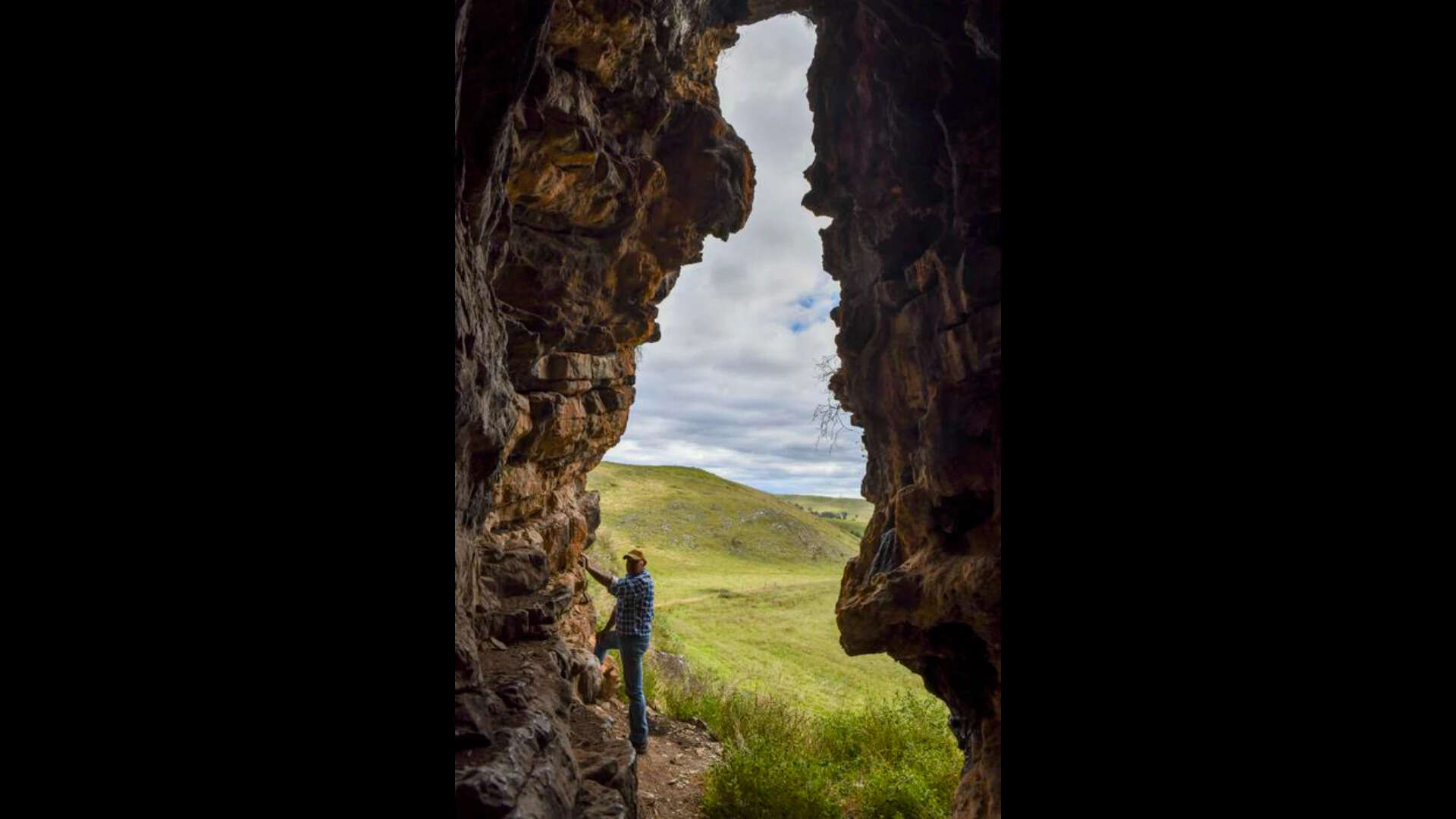
Pic courtesy: Jess Shapiro, GunaiKurnai Land and Waters Corporation
Dr Elle Grono and her international team studied phytoliths excavated from Cloggs Cave. The research formed part of archaeological excavations undertaken in 2019 and 2020 to understand how people gathered and used plants inside the cave in the past. The phytoliths were collected from two deep pits excavated in the cave, reaching back through strata laid down over 25,000 years.“Unlike pollen, which is dispersed by wind or insects, phytoliths mostly accumulate at the spot where a plant decays. No plants grow inside the cave due to a lack of light, so the phytoliths must have been carried in by people or by animals such as possums on their fur or through their scats. We focused on half-burnt phytoliths from ashy layers, which can only have been brought in by people, as unburnt ones might have arrived through either means,” Grono explained.The team used microscopy to study the phytoliths found in the two pits. Using luminescence and radiocarbon dating, the researchers found that the pits contained 73 thin layers of ash left by people between about 4,400 and 1,600 years ago. Between these layers, they also found something unexpected: a small standing stone, about 28 cm high. The researchers believe that this stone could have been erected in the cave by Old Ancestors for ritual purposes around 2,000 years ago.
Grass for magic rituals
Representative image
The researchers identified 29 different types of phytoliths from plants including grasses, herbs and woody plants. Most were well preserved. About 97% came from grasses of the subfamily Pooideae, which grows in cool climates, as well as from the Panicoideae family, which mostly grows under warm and humid conditions. Phytoliths from the Chloridoideae family, drought-resistant grasses that grow well in warm, arid environments, were less common. Woody plants and herbs were also rare. The Old Ancestors were selective about the plants they brought into the cave, avoiding many species found in nearby forests and woodlands and instead choosing grasses growing close to the cave entrance.“The phytoliths found at Cloggs Cave were from different parts of grass plants such as stems, leaves, flowers and roots, indicating that whole grasses were brought in, including the inedible parts,” Grono said.“Their burning is consistent with GunaiKurnai traditional practices of using ash to perform magic and rituals, and also to track the footsteps of anyone coming in, including spirit beings. Other macro-botanical evidence, such as fat-smeared, trimmed wooden sticks from Casuarina trees, was also found in deeper and older deposits, indicating that other kinds of rituals using woody plants were performed,” Professor Bruno David from Monash University, who co-led the excavations with the GunaiKurnai Land and Waters Corporation, concluded.