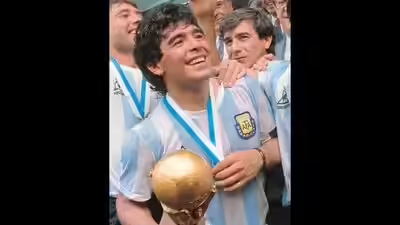
Diego Maradona‘s life resists a simple summary, genius on the pitch, controversy everywhere else. He captured both sides of that in one sentence during his emotional farewell to football. “I made mistakes, and I paid for them,” he told the crowd. “But the ball is still pure.” He was not denying anything. He was drawing a line between the person and the game, insisting one could be flawed without dragging the other down with it. Few players in the sport’s history carried both extremes as visibly as Maradona did, which is exactly why a line built around holding them apart has stayed with people for more than two decades since he first said it, long after the specific circumstances that prompted it have faded from memory.
Quote of the day by Diego Maradona
“I made mistakes, and I paid for them. But the ball is still pure”
What can we learn from Diego Maradona’s quote
The first half admits fault directly, with no attempt to soften it or explain it away. Maradona is not asking for sympathy. He is simply stating that mistakes happened and that he faced the consequences of them.The second half is where the real weight sits. The ball, standing in for football itself, remains untouched by any of it. Its meaning does not shrink because the person playing it was imperfect. Maradona is arguing that a person’s failures and the thing they love, or create, or dedicate themselves to, do not have to collapse into each other. One can be damaged without destroying the other.
Where he actually said this
Maradona delivered this line during his testimonial match at La Bombonera, the Boca Juniors stadium in Buenos Aires, in November 2001, in an emotional farewell speech to football. In the same speech, he said plainly that football itself should never be blamed for anyone’s mistakes, only the person making them, before adding the line about having made mistakes and paid for them.That context matters. This was not a calculated soundbite. It was said to a stadium full of people who had watched him for two decades, at the exact moment he was stepping away from the game that had defined him, mistakes and all.
Why football meant everything to him
Maradona grew up in Villa Fiorito, a poor neighbourhood outside Buenos Aires, and became one of the most gifted players the sport had ever produced, with a level of close control and dribbling that made the game look different when he had the ball. That connection went well beyond professional skill. Football was, by his own account, the one place where he could simply play, regardless of what else was happening around him.His career off the pitch involved real, well documented difficulty, including public struggles with drug addiction and a doping ban that kept him out of the 1994 World Cup. None of that erased what he could do with a ball at his feet, which is really the tension the quote is naming directly rather than avoiding.
Why admitting a mistake can carry more weight than denying it
Public figures often face pressure to protect their image at almost any cost, denying fault or shifting blame rather than admitting it outright. Maradona’s line does neither. He states plainly that mistakes happened and that he paid the price for them, without pretending the consequences disappeared once he said so out loud. There is a kind of strength in that admission that denial never manages to produce.
Other famous quotes by Diego Maradona
- “To see the ball, to run after it, makes me the happiest man in the world.”
- “I am black or white, I’ll never be grey in my life.”
- “You can say a lot of things about me, but you can never say I don’t take risks.”
- “If I could apologise and go back and change history I would do. But the goal is still a goal, Argentina became world champions and I was the best player in the world.”
How its legacy continues today
Maradona’s quote endures because it refuses to offer a tidy version of a genuinely complicated person. It does not claim the mistakes did not matter, and it does not suggest that talent excuses them either. It simply holds both facts at once, that a person can fail seriously in parts of their life while the thing they built or loved elsewhere remains real and untouched by that failure. The ball, in his words, stayed pure. That was never really about football alone.