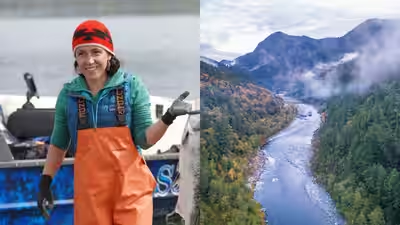
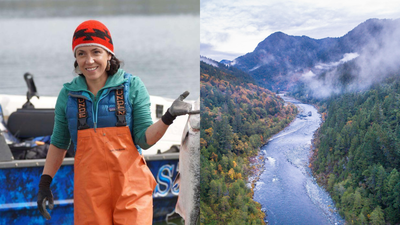
More than a century after four dams cut off the Klamath River’s natural flow, salmon are finally swimming freely upstream again. The historic comeback follows the completion of the world’s largest dam removal project in October 2024, ending decades of ecological damage that devastated fish populations and disrupted the lives of the Yurok people in northern California. Behind that milestone was a generations-long campaign led by Indigenous Yurok families, including attorney and activist Amy Bowers Cordalis, whose memoir The Water Remembers recounts her family’s role in restoring a river they consider central to their culture, identity and survival.
The California river that sustained the Yurok people
Flowing about 263 miles from southern Oregon to the Pacific Ocean in northern California, the Klamath River has long been one of the most important salmon rivers on the US West Coast. For the Yurok Tribe, whose ancestral homeland lies along the river’s lower reaches, the Klamath is far more than a waterway. Salmon have sustained the community for generations, providing food, supporting ceremonies and shaping cultural traditions. Yurok beliefs hold that the wellbeing of the people is inseparable from the health of the river, making its restoration not only an environmental goal but also a cultural and spiritual responsibility.
When four dams blocked a lifeline
The first of four hydroelectric dams was built on the Klamath River in 1918, followed by three more over the next four decades. Together, they generated electricity but blocked more than 400 miles of historic salmon habitat. The reservoirs created behind the dams slowed the river’s flow, raised water temperatures and encouraged harmful algal blooms that degraded water quality. Native fish populations declined sharply as salmon could no longer reach their traditional spawning grounds, affecting wildlife, commercial fisheries and Indigenous communities that depended on healthy salmon runs.
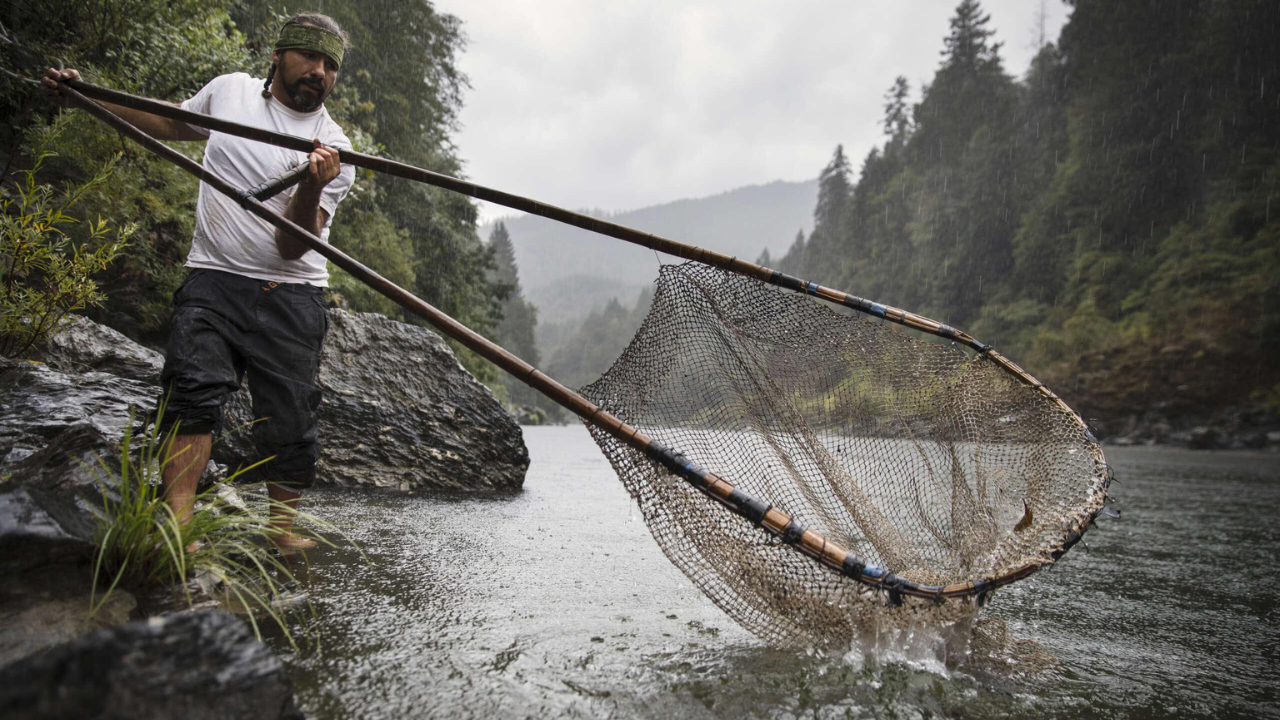
Yurok fishers on the Klamath River, where salmon have sustained Indigenous communities for generations.
The disaster that sparked a movement
The campaign to restore the Klamath gained national attention after one of the worst fish kills in US history. In September 2002, an estimated 34,000 to 78,000 adult Chinook salmon died when low river flows, unusually warm water and an outbreak of the parasitic disease known as “ich” swept through the river. Thousands of dead fish lined the riverbanks within the Yurok Reservation, leaving a lasting impression on tribal members. Amy Bowers Cordalis, then an intern with the Yurok Tribal Fisheries Department, witnessed the ecological disaster firsthand. The event inspired her to pursue a legal career focused on protecting Indigenous rights and restoring the Klamath River.
The family behind the fight
The struggle to protect the Klamath River stretched across multiple generations of Cordalis’ family. Her great-grandmother, Geneva Mattz, continued fishing despite California’s restrictions on Indigenous fishing rights. Her great-uncle, Ray Mattz, challenged those restrictions in court and won a landmark US Supreme Court case in 1973 that reaffirmed the Yurok people’s right to fish on their ancestral lands. Building on that legacy, Cordalis became general counsel for the Yurok Tribe and emerged as one of the leading voices in negotiations to remove the dams, working alongside tribal leaders, conservation groups, government agencies and the dam owner to secure the river’s future.
The world’s largest dam removal project
After more than two decades of negotiations, legal action and environmental advocacy, the US Federal Energy Regulatory Commission approved the removal of the four hydroelectric dams in 2022. Demolition began soon afterwards, and by October 2024, the final dam had been dismantled, completing the largest dam removal and river restoration project ever undertaken. The unprecedented effort required cooperation between tribal nations, federal and state agencies, conservation organisations, engineers and the utility company that owned the dams, making it one of the most significant river restoration projects in modern history.
Salmon return after more than 100 years
The river began showing signs of recovery almost immediately after the dams came down. In 2024, Chinook salmon migrated upstream beyond the former dam sites for the first time in more than a century, reclaiming spawning habitat that had been inaccessible for generations. Scientists are continuing to monitor fish populations, water quality and ecosystem recovery, while large-scale habitat restoration projects across the Klamath Basin are expected to continue through 2028. Researchers hope the river’s revival will strengthen biodiversity, improve water quality and make native fish populations more resilient to future climate challenges.
A blueprint for river restoration
The restoration of the Klamath River has become a landmark example of what long-term environmental collaboration can achieve. It shows how Indigenous leadership, scientific research, legal advocacy and government cooperation can reverse decades of ecological damage. While rivers around the world continue to face pressures from dams, pollution and climate change, the Klamath’s recovery offers a rare success story. Through persistence spanning generations, the Yurok people transformed a river once defined by ecological decline into a powerful example of restoration and resilience.