
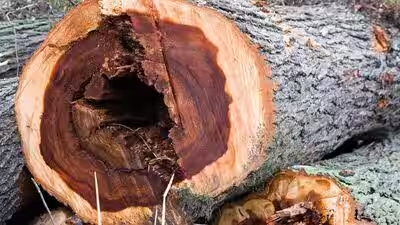
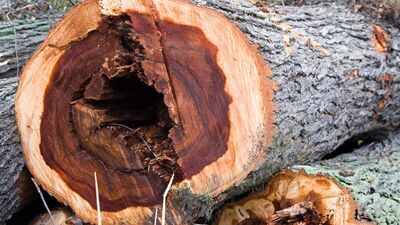
Six decades ago, Dutch elm disease swept across the United States, killing an estimated 100 million American elms that once shaded streets, parks and college campuses from coast to coast. The fungus, carried by bark beetles, turned majestic, vase-shaped trees into dead standing skeletons and changed the look of countless towns. Now, in a bold and somewhat counterintuitive move, scientists have deliberately infected about 6,000 young elms with the disease in a large-scale experiment designed to find the rare individuals that can survive. As reported by The Associated Press, this “survival of the fittest” approach could be the key to restoring elms to the American landscape in an era of climate change and urban heat. Read on to know more:The fall of an American iconFor much of the 20th century, the American elm (scientific name: Ulmus americana) was one of the most common street trees in North America. Fast-growing, tolerant of compacted soils and pollution, and naturally shaped like an umbrella, it was a favourite of city planners and homeowners alike. By the 1930s, there were an estimated 100 million elms across the country, forming green tunnels along boulevards and defining the character of many neighbourhoods.Then came Dutch elm disease. First detected in the U.S.in the 1930s, the fungal pathogen spread rapidly in the following decades, carried from tree to tree by native and European bark beetles. The fungus clogs the tree’s water-conducting vessels, causing branches to wilt, leaves to turn yellow and brown, and eventually killing the entire tree.By the 1960s and 1970s, the epidemic had peaked. Entire rows of elms died within a few years of infection. Cities that had once been known for their elm-lined streets were left with gaps in their canopies that were often filled with other, less iconic species.Why elms mattered, and why their loss still hurtsThe loss of the American elm was more than aesthetic. Large shade trees play a critical role in urban environments: they cool streets and buildings, reducing energy use and mitigating heat islands; they intercept rainfall, reducing runoff and strain on stormwater systems; they provide habitat for birds, insects and other wildlife; and they contribute to mental health and neighbourhood identity, giving streets a sense of place.When elms disappeared, many communities lost a significant portion of their tree canopy almost overnight. Replacing them with smaller or shorter-lived species meant less shade, less cooling and a different visual character that many residents still miss.A new strategy: infect thousands to find the few that surviveFor years, researchers and arborists tried various approaches to bring elms back: breeding programs, fungicide injections, sanitation efforts to remove infected trees and control beetles. Some progress was made, but no solution fully restored elms to their former dominance.Now, a team of scientists has launched a more radical experiment. At research sites in the Midwest, they have planted about 6,000 young American elms and then deliberately exposed them to Dutch elm disease. The goal is not to save every tree, but to identify the tiny fraction that naturally resist or tolerate the fungus.This approach is based on a simple premise: even in a species devastated by disease, there are almost always a few individuals with genetic traits that help them survive. By infecting a large population under controlled conditions, researchers can find those survivors more quickly and reliably than by waiting for natural infections in the wild.How the experiment worksThe process is straightforward in concept, though logistically demanding. Why? Because researchers grow thousands of elm seedlings from seed collected across the species’ range, and then the young trees are planted in research plots where conditions can be monitored. Scientists then introduce the Dutch elm disease fungus, often by drilling small holes and injecting a measured dose of the pathogen. Over the following months and years, they track which trees show symptoms, which decline and which remain healthy.Most of the 6,000 elms in the current experiment are expected to die or suffer severe damage. But researchers are banking on the fact that a small percentage, perhaps 1% or less, will show strong resistance. Those survivors become the foundation for the next generation of disease-tolerant elms.From survivors to street treesOnce the resistant individuals are identified, the work moves to propagation and testing. Scientists and nursery partners clone the surviving trees through cuttings or tissue culture to preserve their genetics. They also grow larger batches of these clones for field trials under different climates and soil conditions. Then, they track their growth, form, pest resistance and overall performance in real-world settings. Only after years of testing will the best candidates be recommended for widespread planting in cities and towns. The goal is to develop elms that are not only resistant to Dutch elm disease but also can thrive in urban environments, withstand drought and heat, and still retain the iconic vase shape that made the species so popular.Climate change adds new urgencyThe push to bring back elms comes as climate change accelerates. Cities are seeing hotter summers, more intense storms and longer droughts, all of which stress urban trees. At the same time, there’s growing recognition that large shade trees are critical to cooling cities and protecting public health. Elms, with their fast growth and wide canopies, are well suited to these challenges: if they can survive disease. A new generation of disease-resistant elms could help municipalities meet tree-planting goals, reduce heat-related risks and restore the historic character of elm-lined streets.Ethical questions: is it right to infect thousands of trees? It may seem harsh, even wasteful, to deliberately infect thousands of healthy trees. Some critics wonder if it’s ethical to kill so many young elms in the name of research. Scientists involved in the work argue that the alternative — allowing elms to continue to disappear while cities lose canopy and cooling — is worse. They also say the experiment is tightly contained, with infected trees kept in research plots and disposed of safely to prevent spreading the disease to surrounding forests. From their perspective, the short-term loss of 6,000 experimental trees is a small price to pay for the chance to restore millions of elms to the landscape over the coming decades.A long road, but a hopeful oneRestoring the American elm will not happen overnight. Even after resistant trees are identified, it will take years to grow them to planting size, test them in different environments and scale up production in nurseries. And Dutch elm disease will not disappear; it will remain a pressure that any new elm must withstand.Still, for the first time in decades, there is a credible path back. The sight of 6,000 young elms in a research plot, knowing that most will die but a few may carry the future of the species, is a powerful symbol of both loss and hope.If the experiment succeeds, future generations may once again walk under broad canopies of American elms, just as their grandparents and great-grandparents did, before the disease swept through and changed the skyline of a nation.