
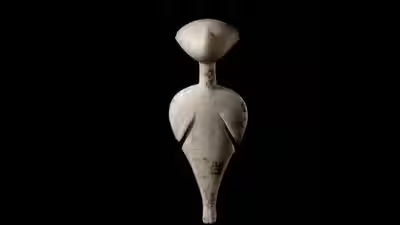
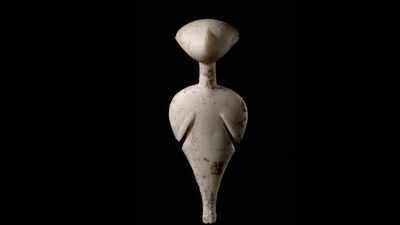
More than 5,000 years ago, a sculptor in what is now Turkey carved a small marble figure with her head tilted towards the sky. Today, the statuette known as “The Stargazer” is one of about 30 similar figures known to exist. The Cleveland Museum of Art says its example is among the few that remain whole and unbroken, making it a rare survivor from the ancient past. Measuring 17.2 centimetres in height, the figure has a highly stylised human form, with an oversized oval head, a long, bird-like neck, small circular eyes and no mouth. An inscribed pubic triangle identifies the figure as female. The museum dates the work to around 3000 BCE and dates it to around 3000 BCE and identifies it as an Early Bronze Age sculpture from Western Anatolia. Its original purpose remains uncertain, although the museum suggests the female figure may have been associated with fertility and abundance.
The Stargazer is a 5,000-year-old marble statuette from ancient Turkey
The Cleveland Museum of Art dates the Stargazer to around 3000 BCE and identifies it as an Early Bronze Age work from Western Anatolia. The museum says only about 30 stargazer figures are known, making the Cleveland example rare because it is whole and unbroken. The figure measures 17.2 centimetres and is carved from translucent marble. Its head tilts dramatically backwards, giving it the appearance of looking towards the sky. The museum describes these figures as highly stylised and recognisably human in only the simplest sense. The Cleveland example is among the earliest human sculptures in the museum’s collection. It remains a rare survivor today.
How its unusual face and upward-looking pose make the Stargazer distinctive
The statuette has a simplified human form. Its oversized, oval-shaped head rests on a slender, bird-like neck that curves backwards. The nose is shown as an elongated ridge, while the small circular eyes are carved in slight relief. The figure has no mouth. Incised lines across the pelvic area indicate that the sculptor deliberately rendered the figure as female. Similar lines continue down the legs before reaching tightly joined feet at the narrowest part of the body. The figure cannot stand by itself. This suggests that it may have been intended to be held or placed lying down. Its translucent marble, when polished, can emulate the appearance of soft flesh, adding to the figure’s mysterious quality.

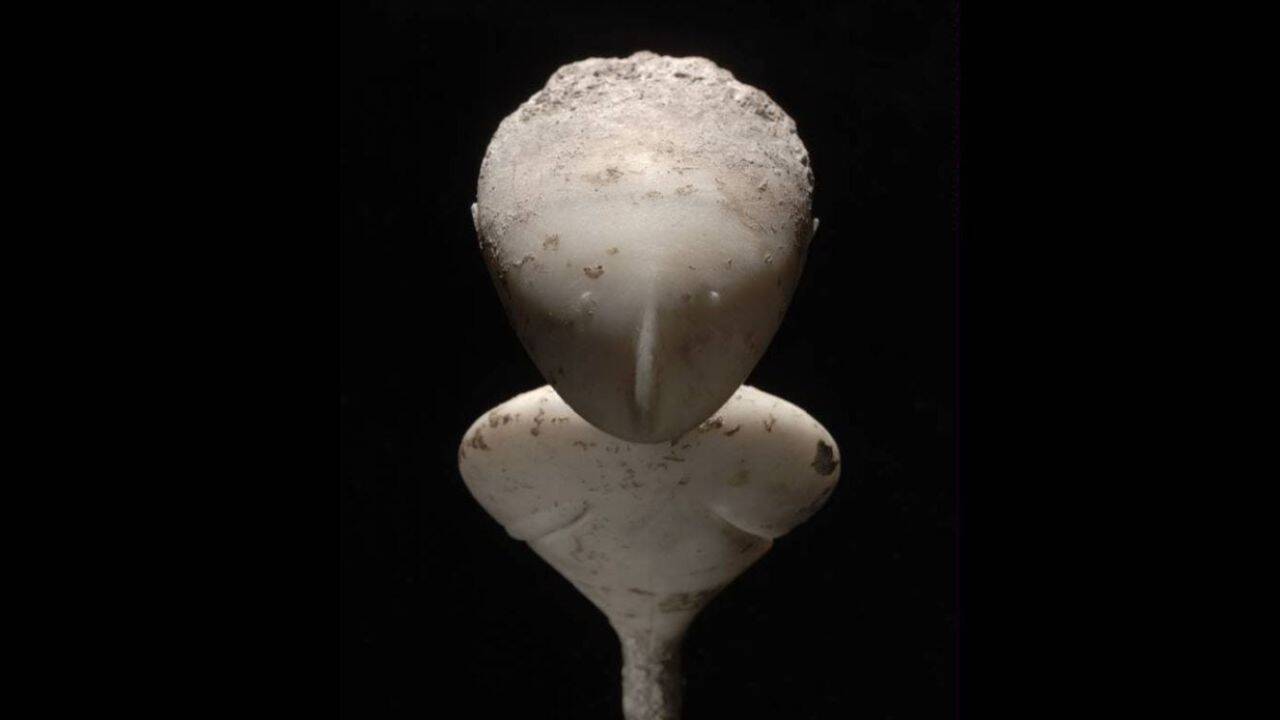
How its unusual face and upward-looking pose make the Stargazer distinctive (PC: The Cleveland Museum of Art)
Why the Stargazer’s original purpose remains a mystery
The purpose of the stargazer figures remains uncertain. The museum notes that they were created before written language and that their function can therefore only be conjectured. All known examples were buried, and traces of dirt and minerals remain on them after thousands of years. Many are broken at the neck. The museum notes that deliberate removal of the head may have happened before burial, possibly indicating ritual meaning. The Cleveland figure itself may have had a connection with fertility and abundance because it was deliberately made as female. However, the museum does not present this as a confirmed explanation. The figure’s burial history therefore leaves questions about how these objects were used and understood by ancient people for researchers.
Kilia figures were found across Western Anatolia and nearby regions
The type has been called “Kilia”, after a location in modern Turkey where the earliest published example was discovered in 1900. Similar figures have been found across Western Anatolia, in Turkey, as well as in Thrace, a region extending north of Turkey into Bulgaria and Greece. It is marble and measures 17.2 by 6.5 by 6.3 centimetres. The museum says its modernist quality influenced later twentieth-century masters.